AECtech 2025 | Annual NYC Conference
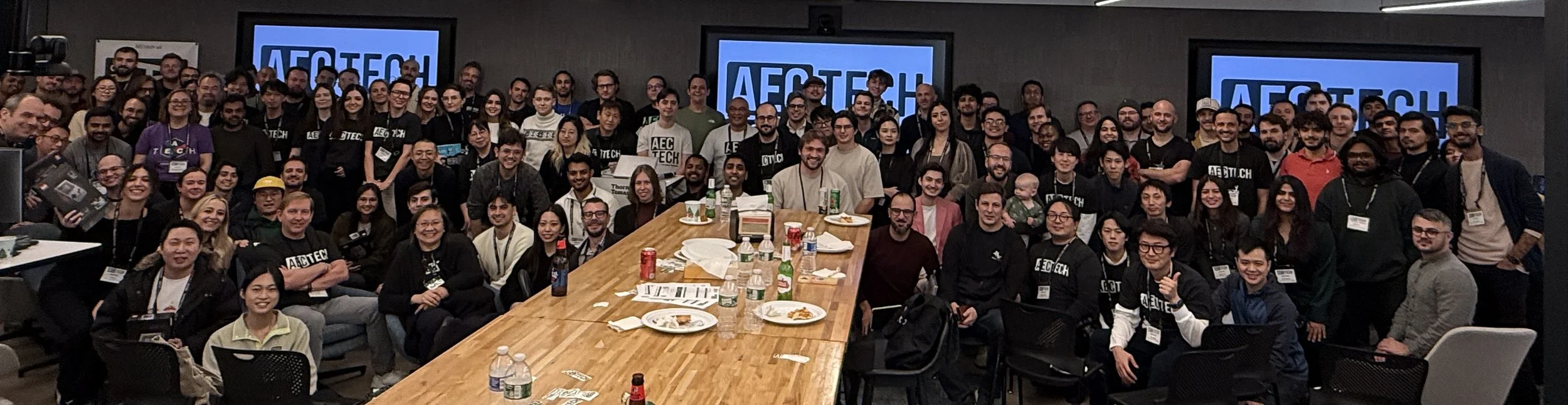
AECtech NYC 2025 marked the thirteenth annual installment of the flagship conference hosted by Thornton Tomasetti | CORE studio, bringing together a vibrant community of more than 500 forward-thinking professionals representing 200 organizations from 23 countries. Spanning an entire week, the conference served as a dynamic platform for celebrating innovation, collaboration, and the evolving future technology in architecture, engineering, and construction, and beyond.
This year’s program featured 7 Virtual Workshops and 14 In-Person Workshops led by industry experts and thought leaders from across the globe. The highly anticipated Tech Crawl made a welcome return, with 15 local architecture and engineering firms opening their offices to provide attendees with behind-the-scenes insights into their work and culture. Returning for 2025, the Tech Tour offered four groups of participants the opportunity to explore notable built projects throughout New York City through curated, guided tours hosted by the firms responsible for their design and development. These activities culminated in the Full Day Symposium, live-streamed from Cornell Tech on Roosevelt Island, NYC, where 16 presenters and panelists shared compelling perspectives, research, and real-world experiences. The week concluded on a high note with a 26-hour hackathon that energized participants and yielded 14 innovative projects, underscoring the creativity and technical excellence of the AECtech community.
Tech Tours
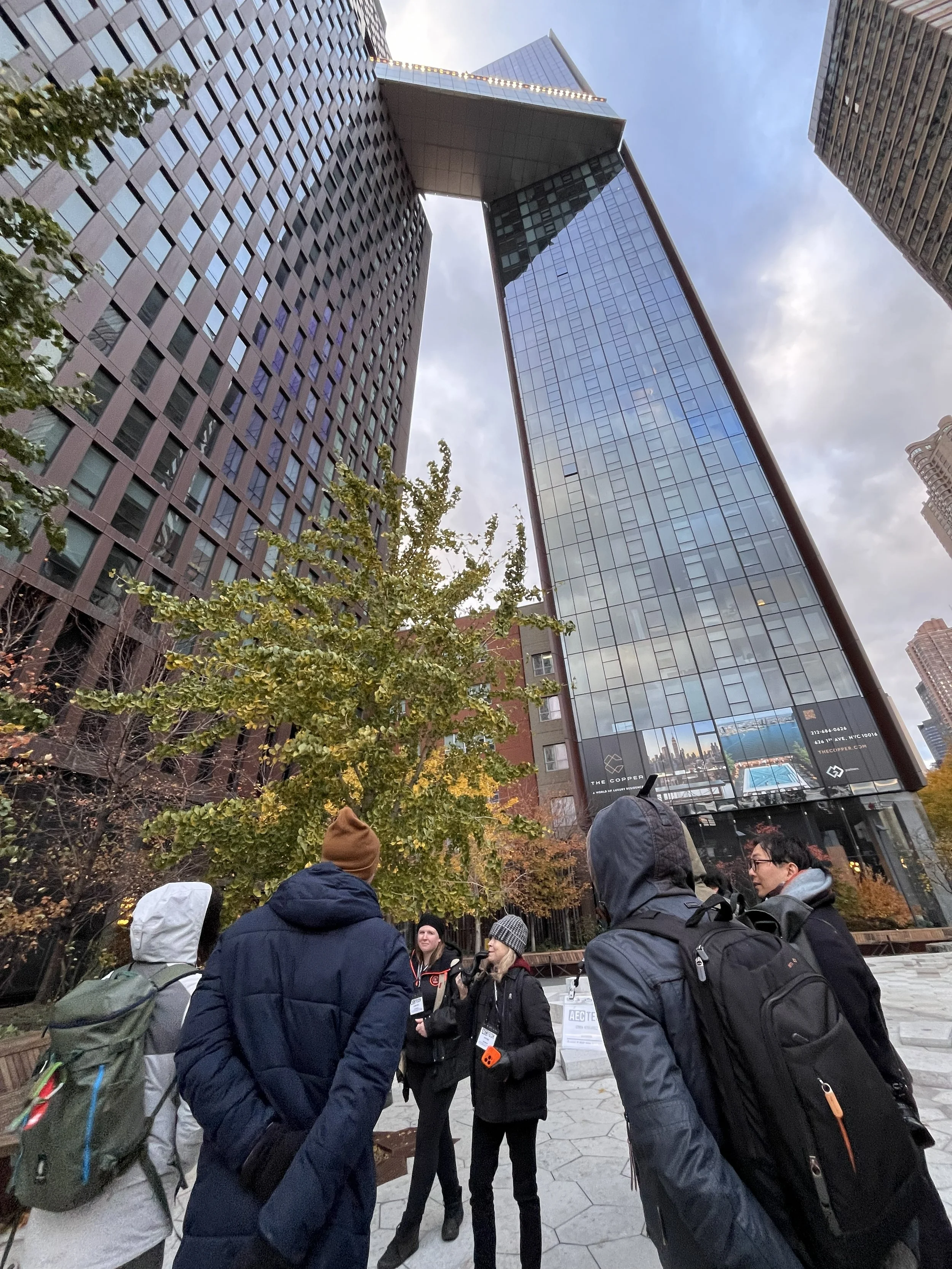
SHoP Architects tour at American Copper Building
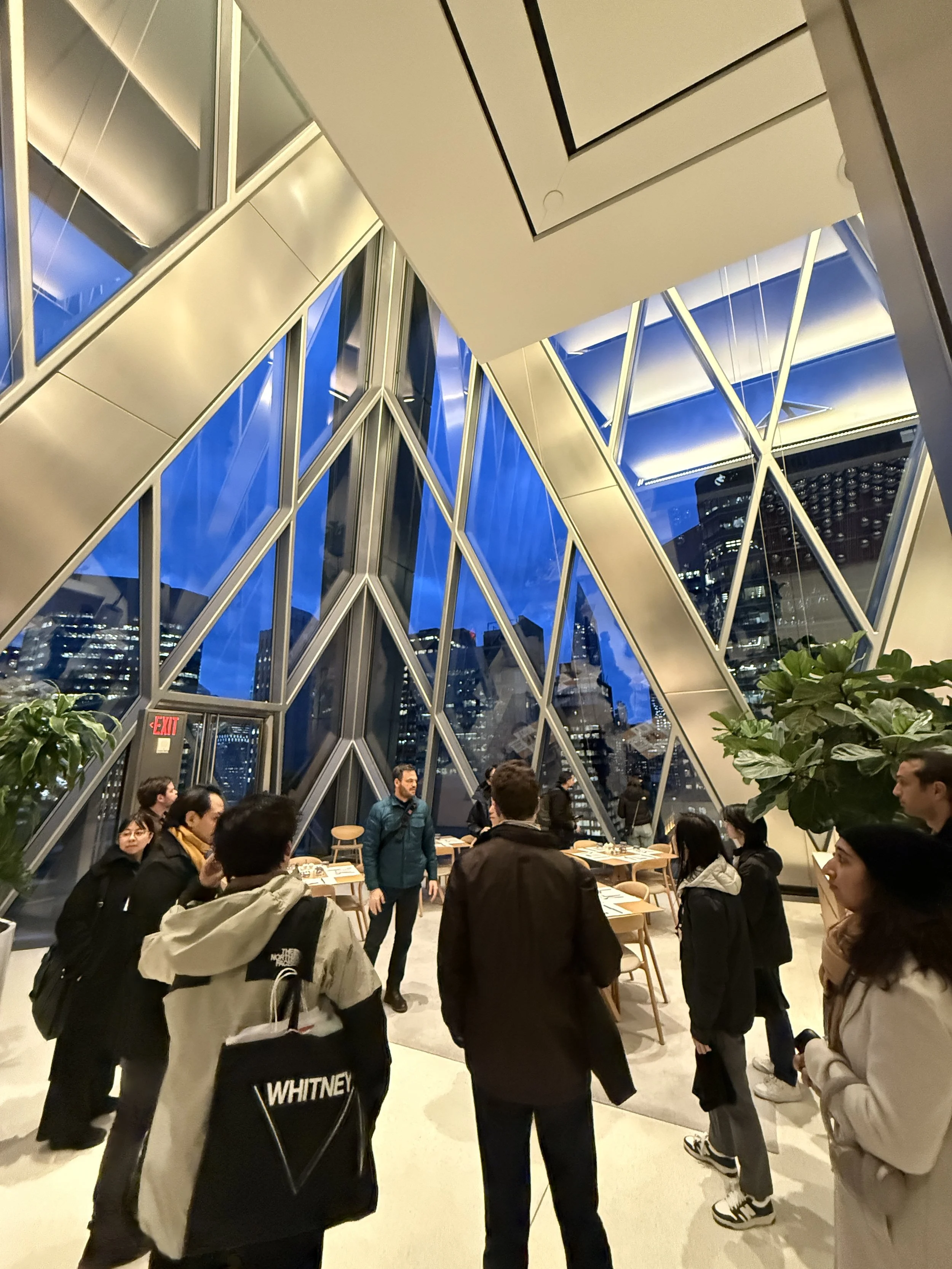
Foster + Partners tour at 425 Park Avenue
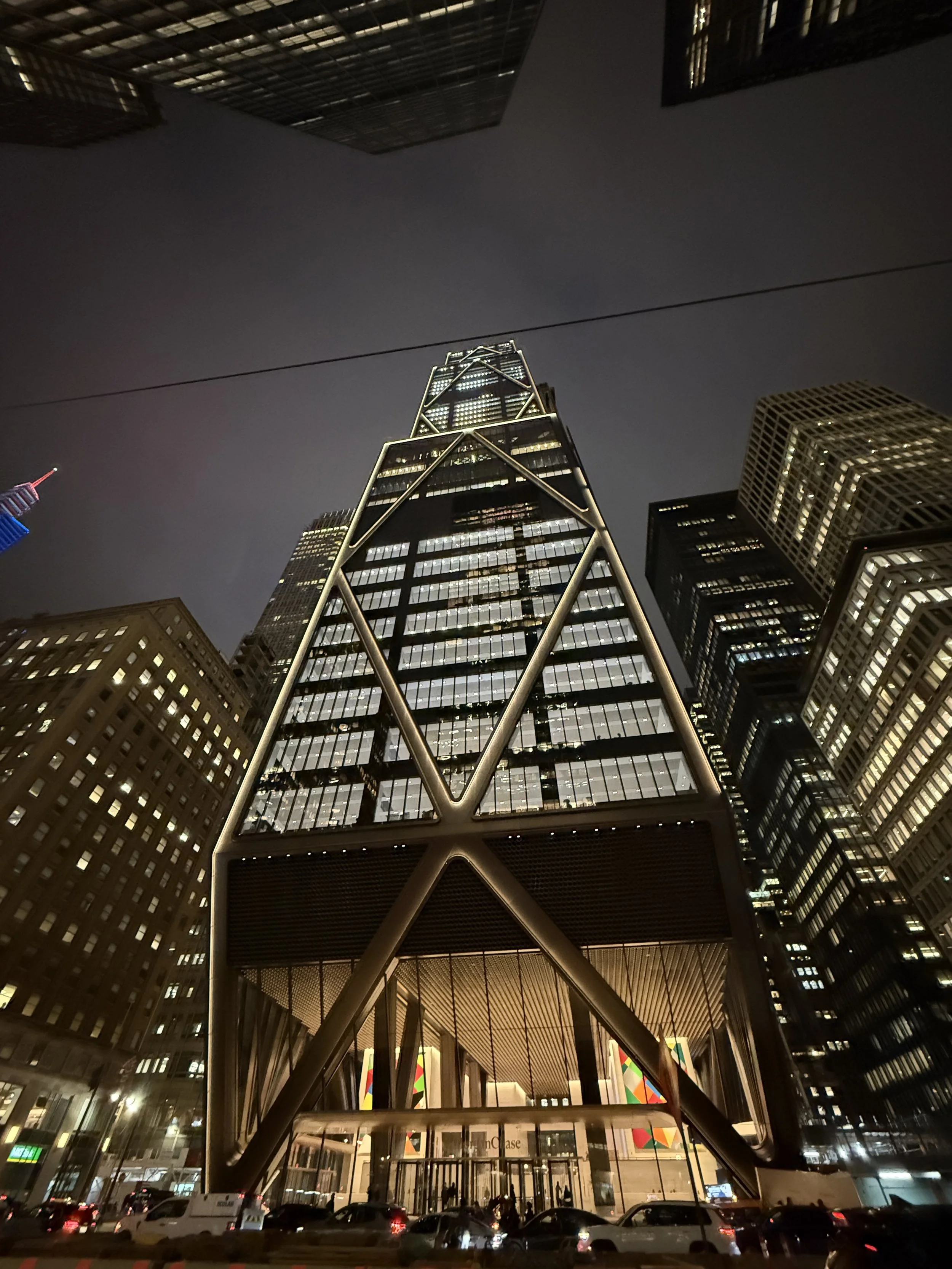
Foster + Partners tour at 270 Park Avenue
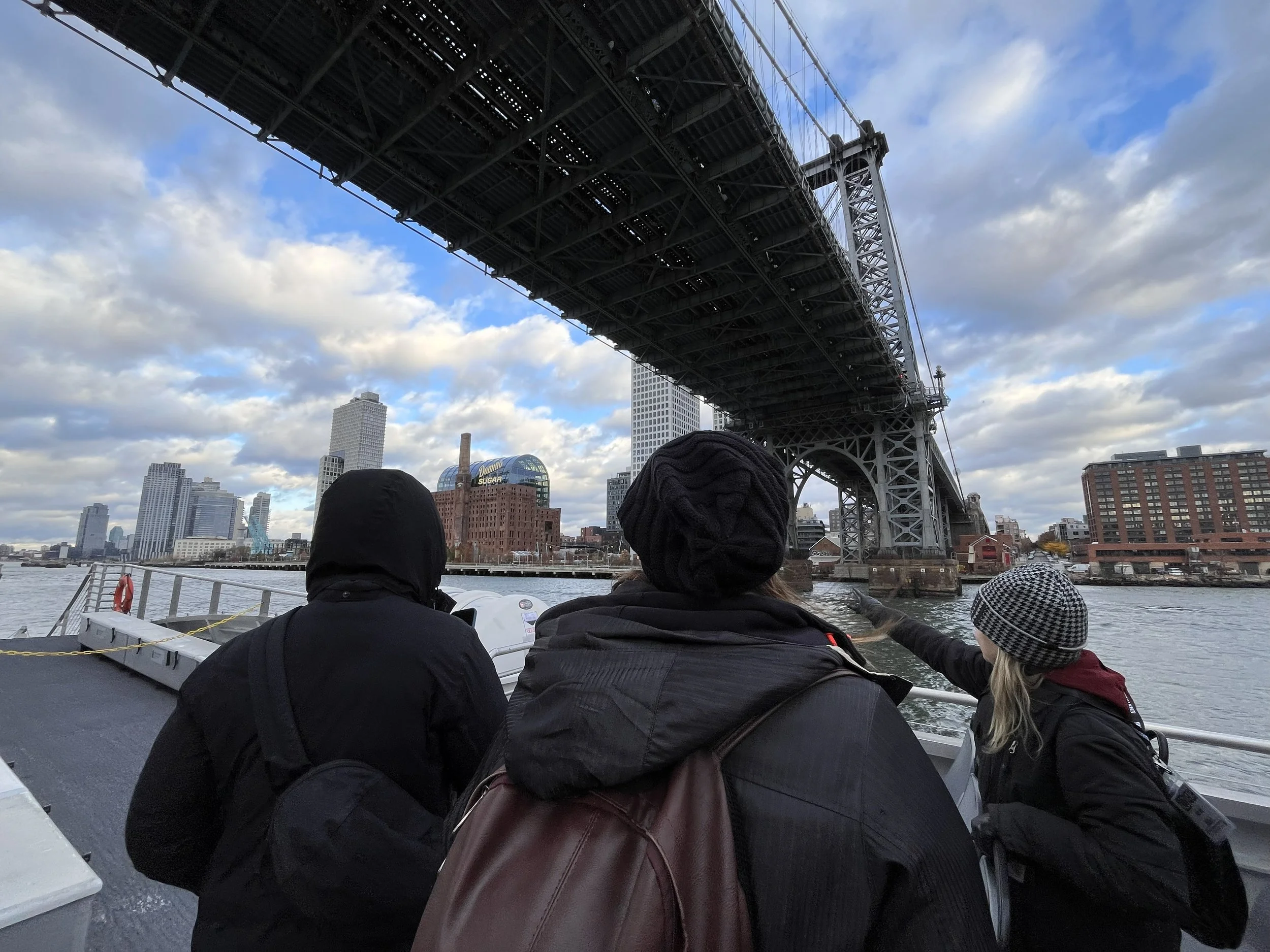
SHoP Architects boat tour at Domino Sugar

AECtech kickoff happy hour at the Edge at Hudson Yards
The Tech Tours returned on November 11th with expanded programming, welcoming four groups of 15 participants for guided explorations of contemporary architecture projects across New York City. Led by the architects and engineers who designed and delivered these projects, the tours offered behind-the-scenes insights into design intent, technical challenges, and project execution. The day concluded with a lively group Happy Hour at Edge, providing the perfect opportunity for attendees to connect, reflect, and officially kick off AECtech 2025 with energy and excitement.

SOM
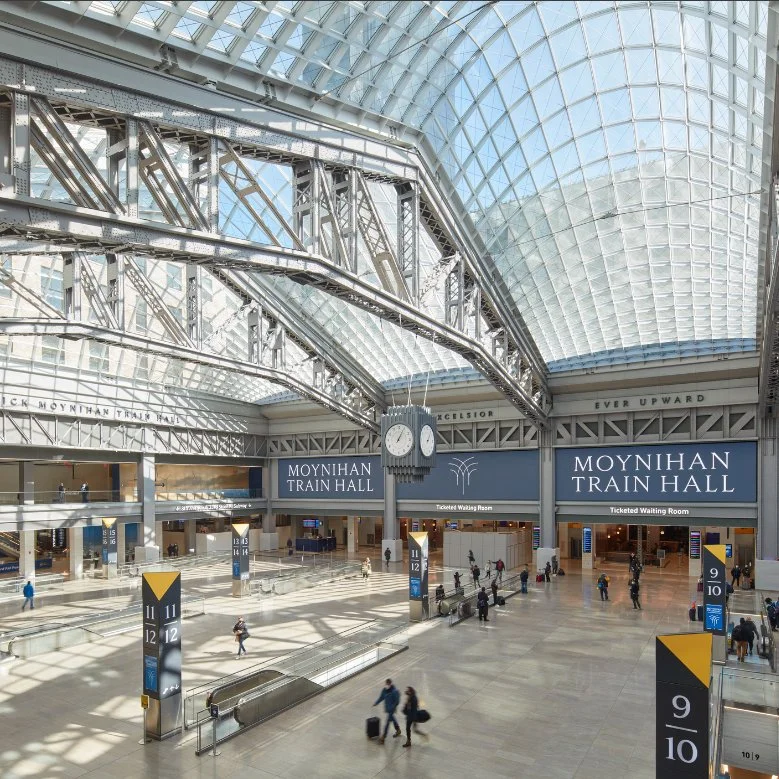
Moynihan Train Hall
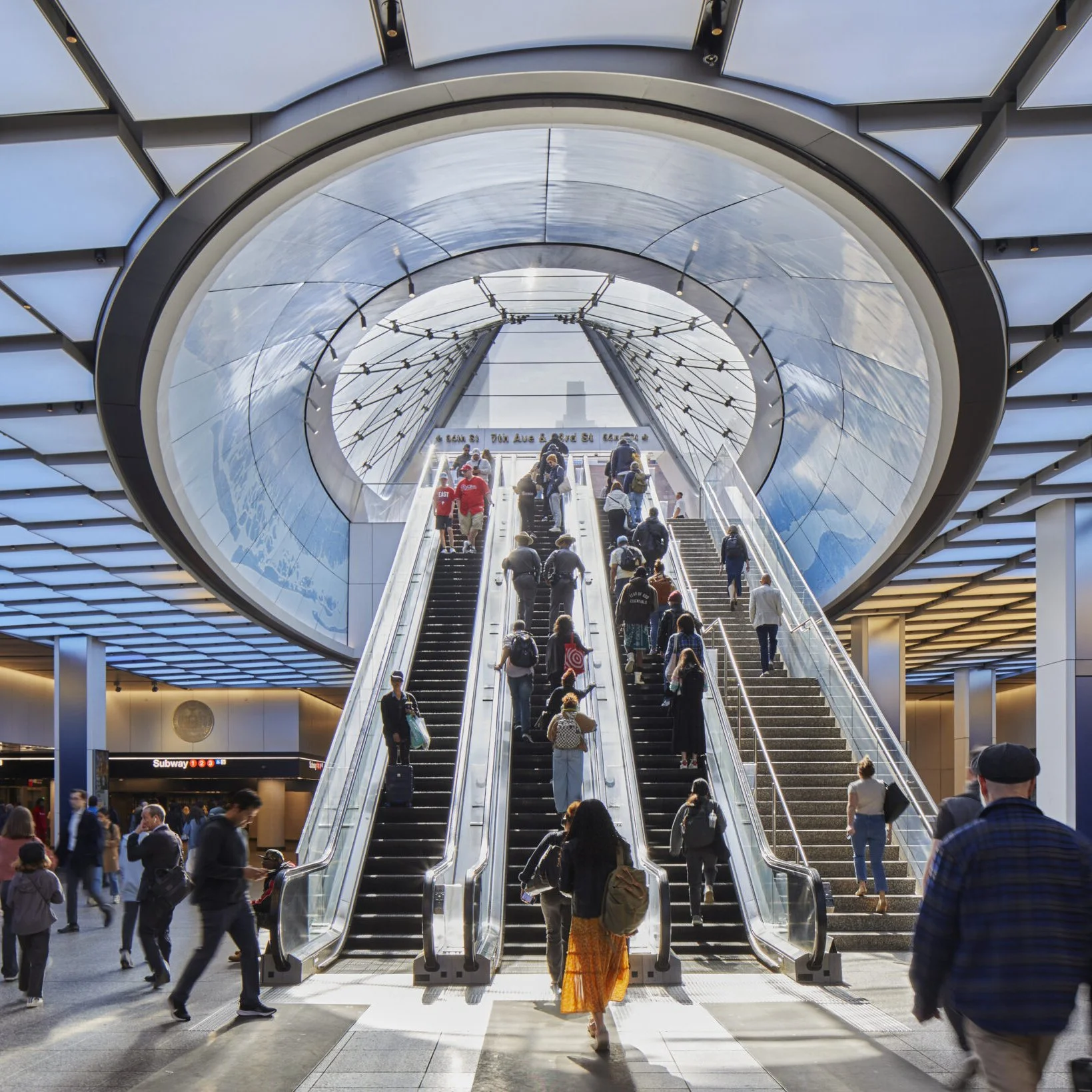
LIRR Concourse
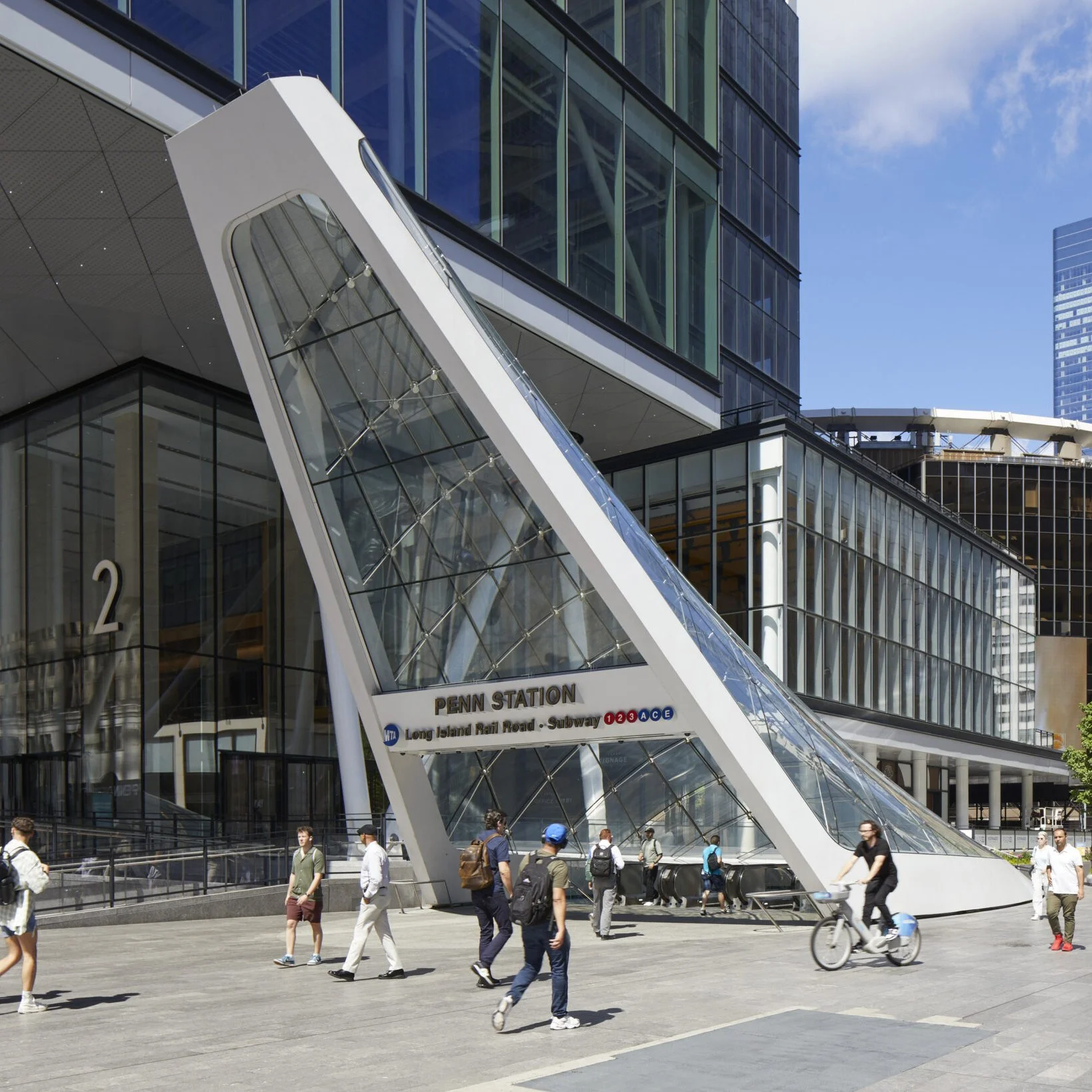
East End Gateway
Foster + Partners
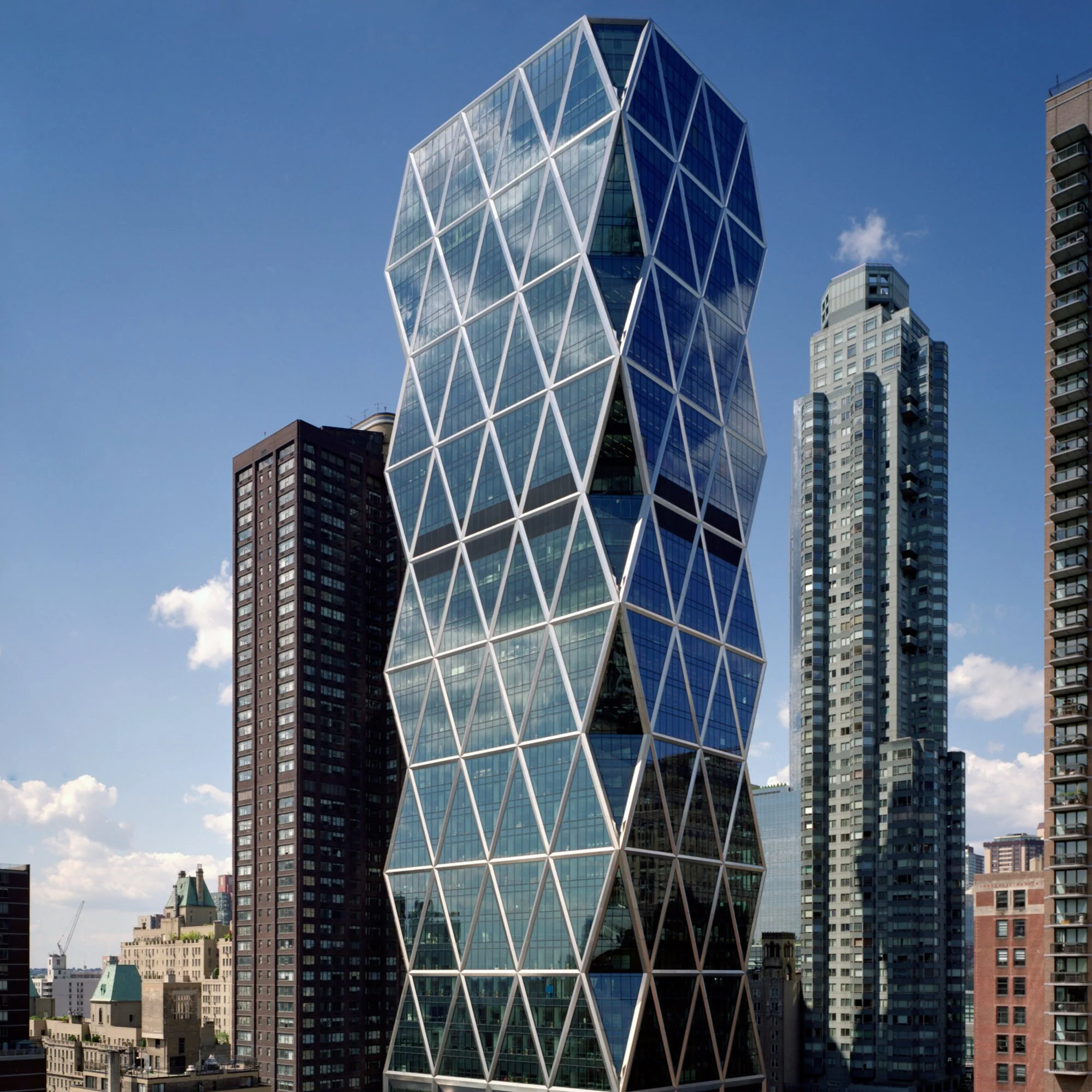
Hearst Headquarters
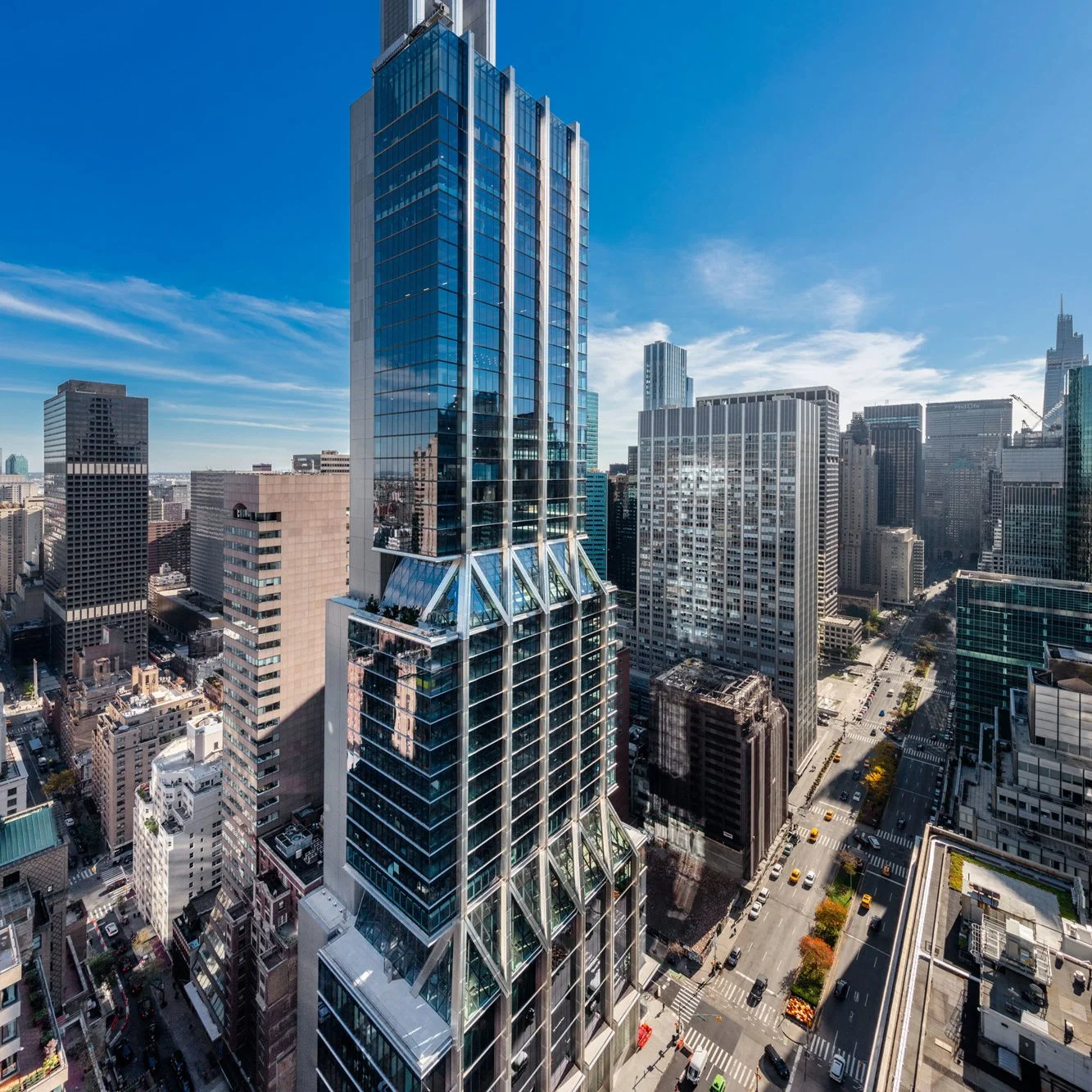
425 Park Avenue
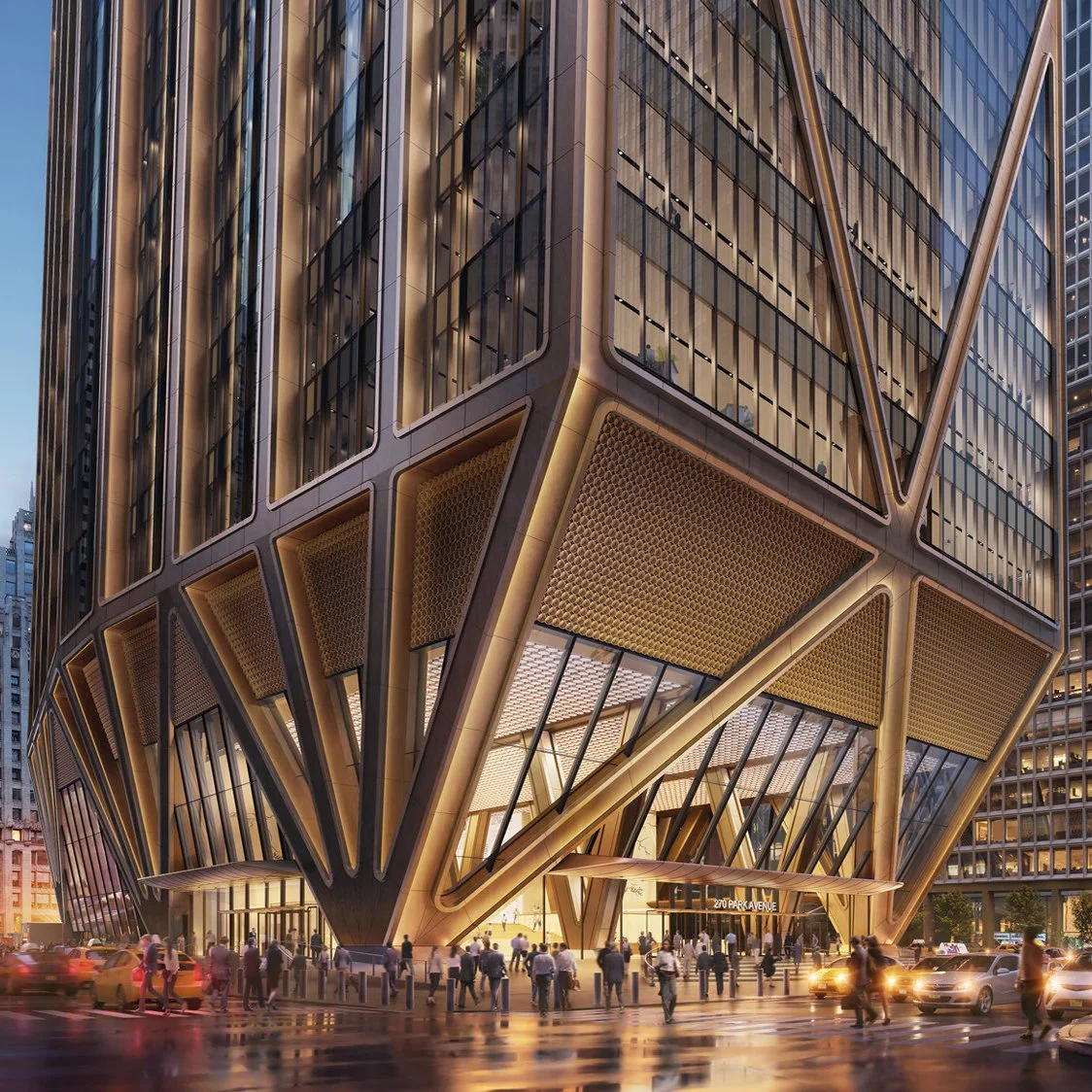
270 Park Avenue

SHoP Architects
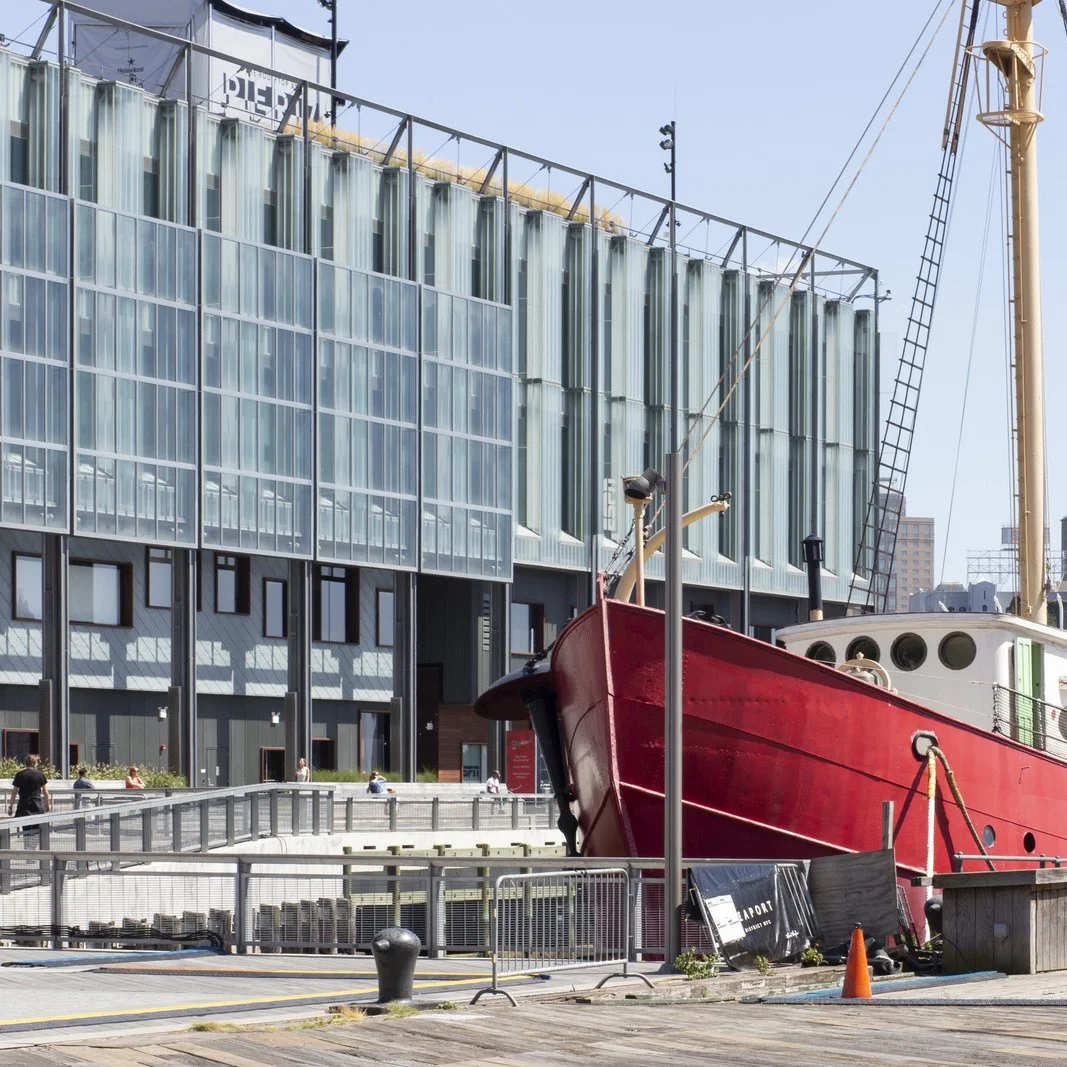
Pier 17
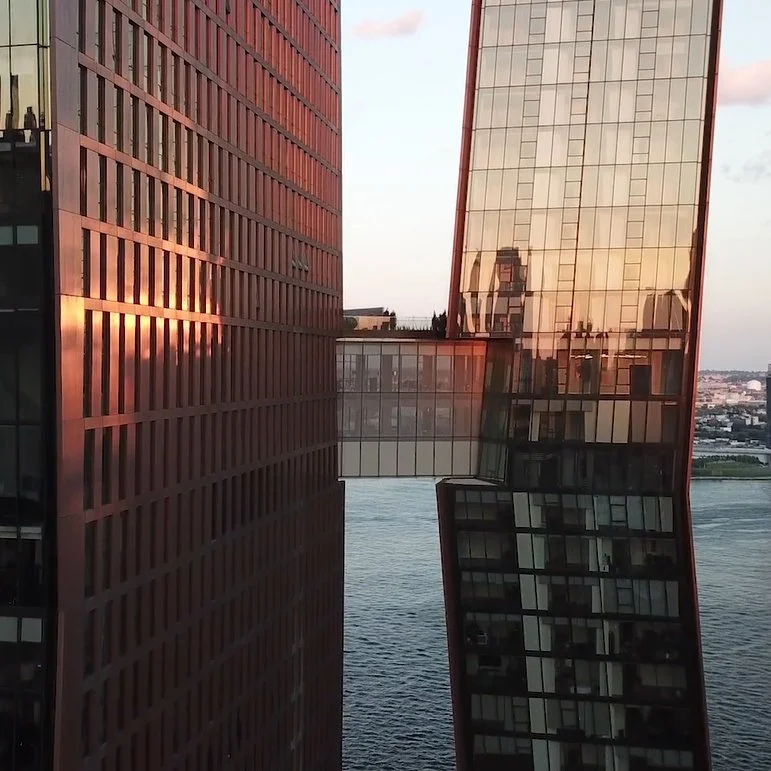
American Copper
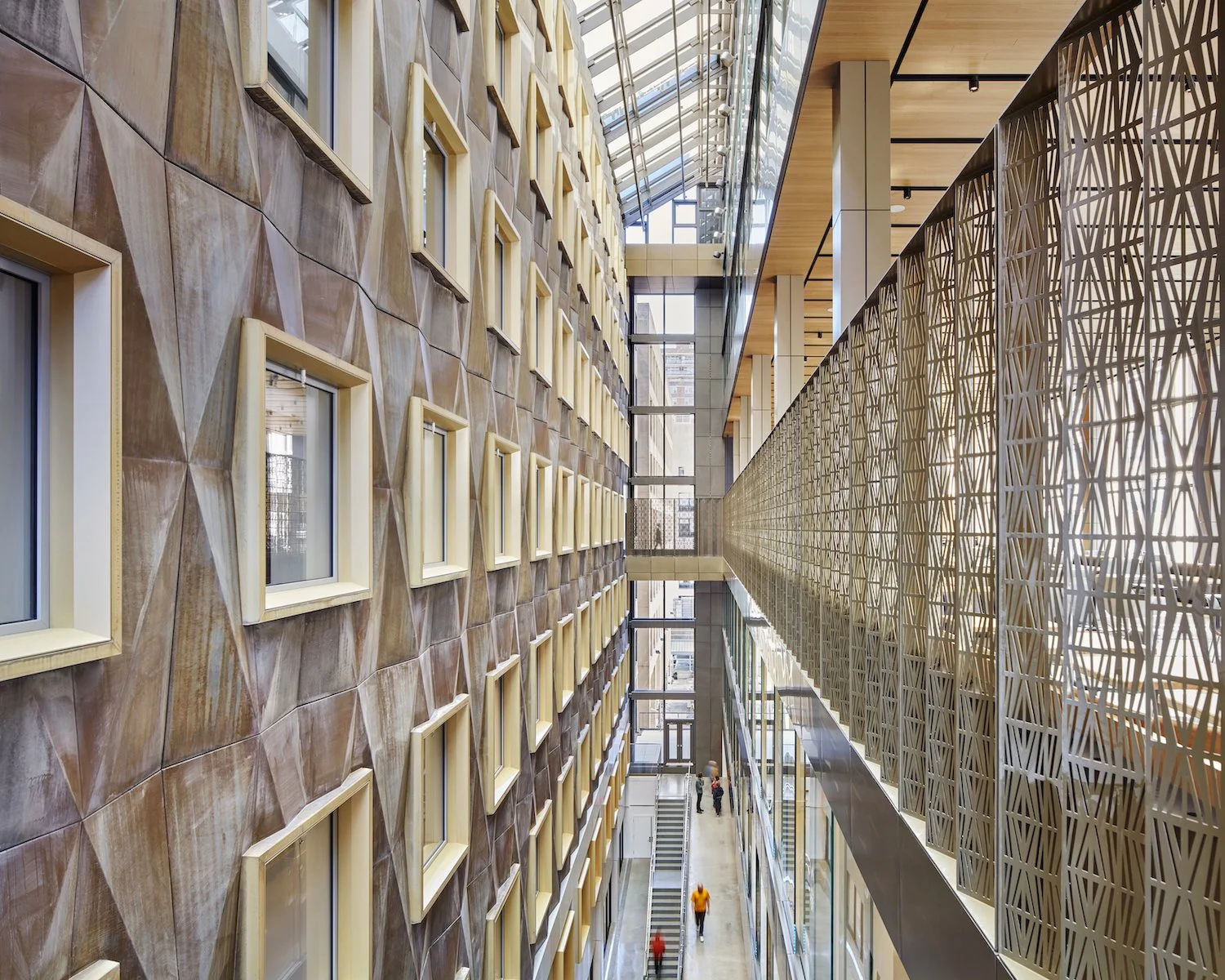
FIT

Thornton Tomasetti

Moynihan High Line Connector
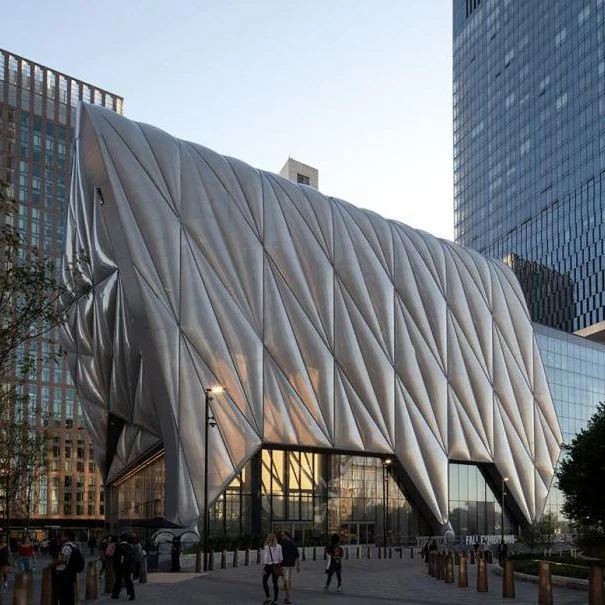
The Shed
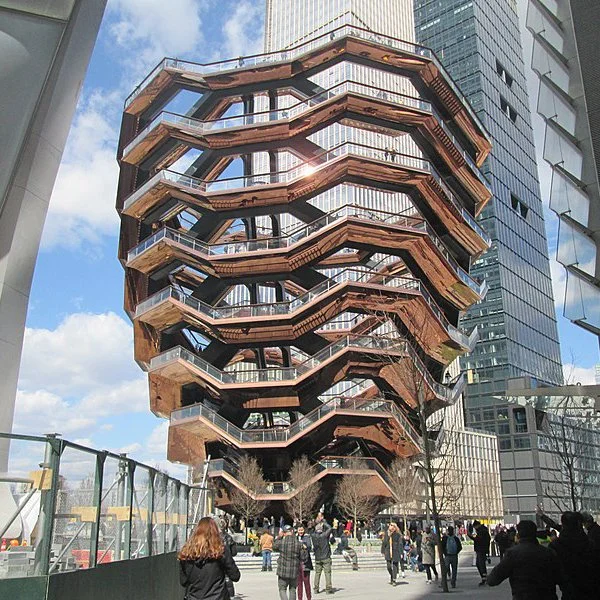
The Vessel
Tech Crawl
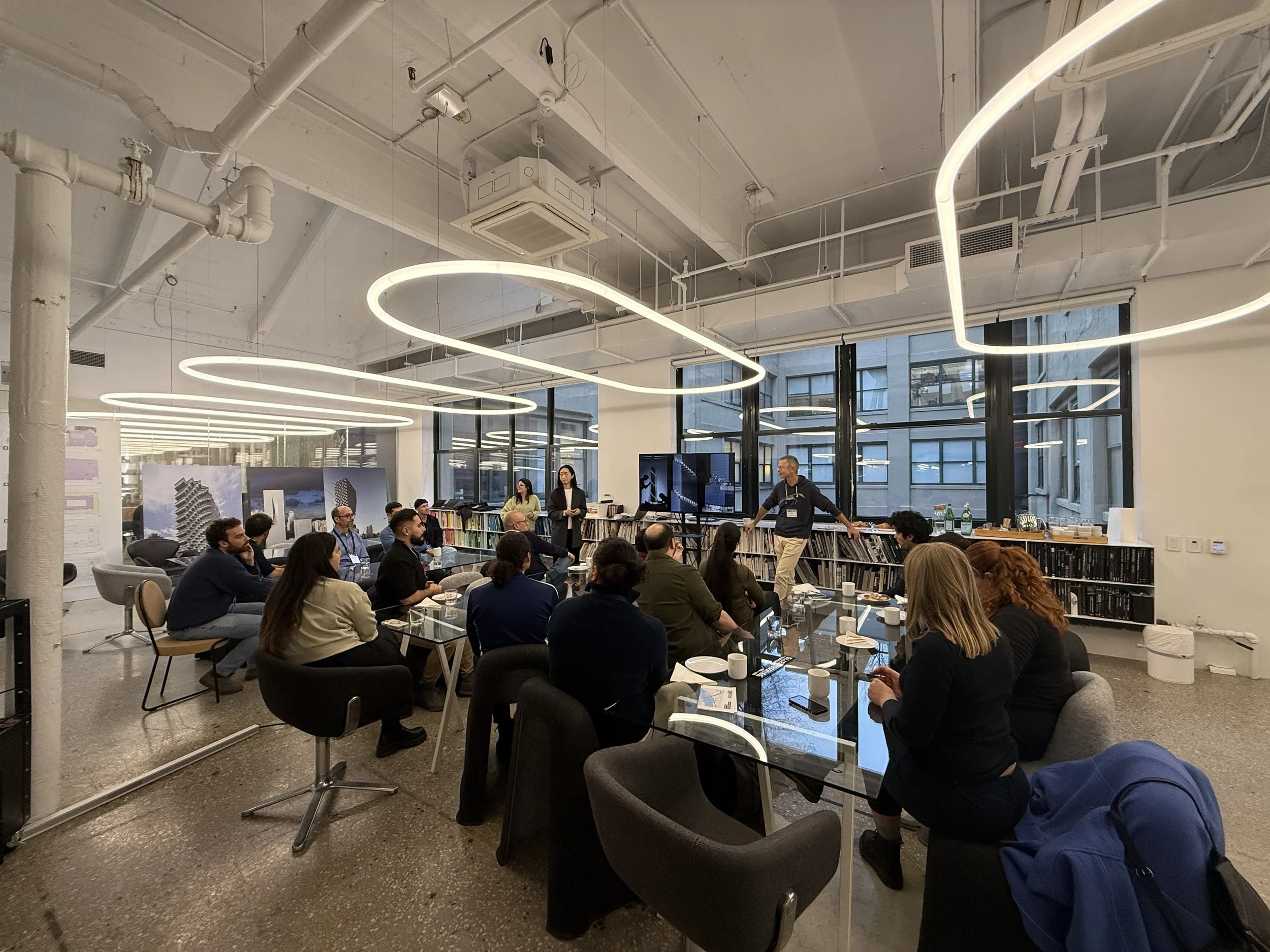
BIG Architects
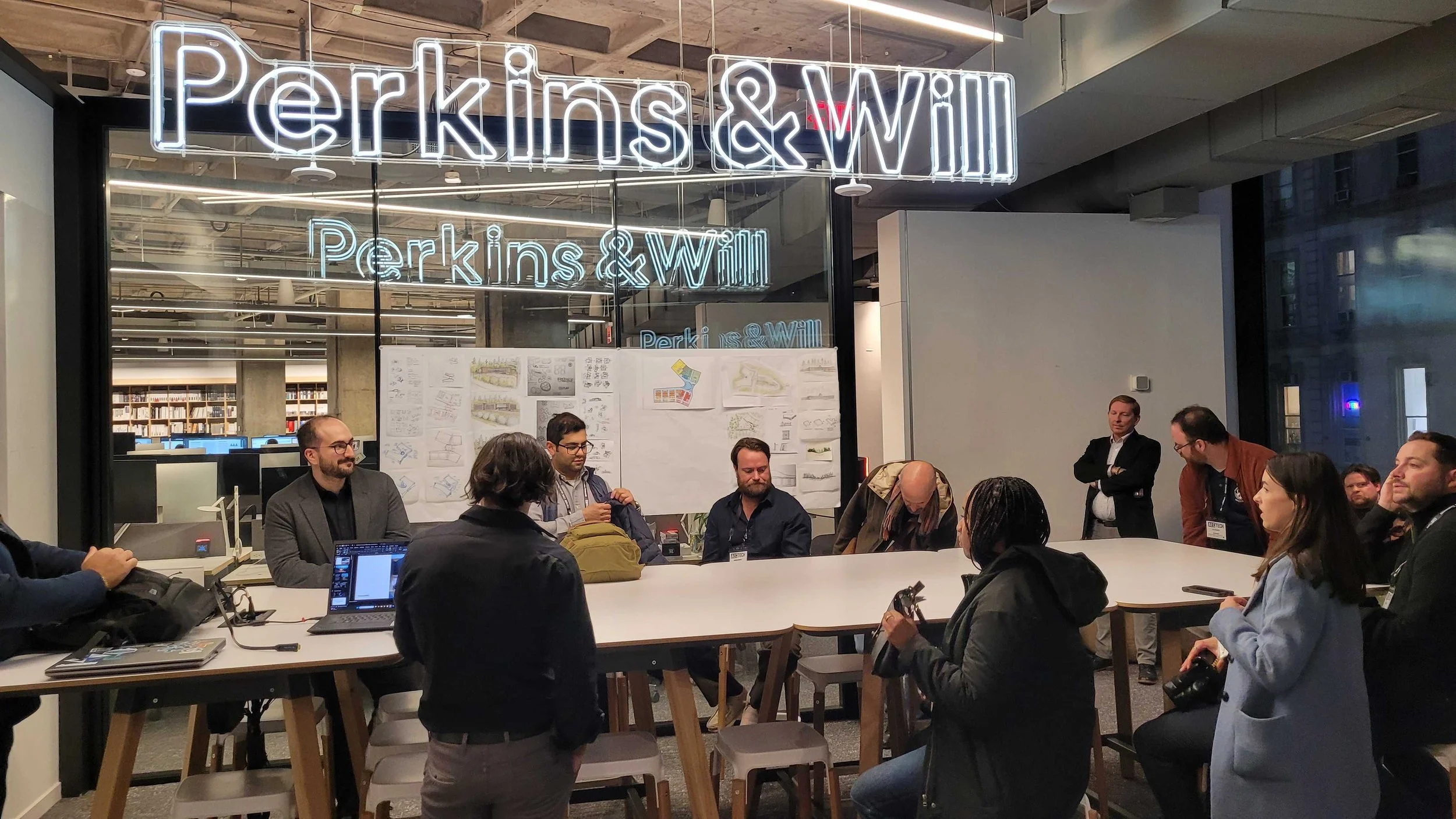
Perkins & Will
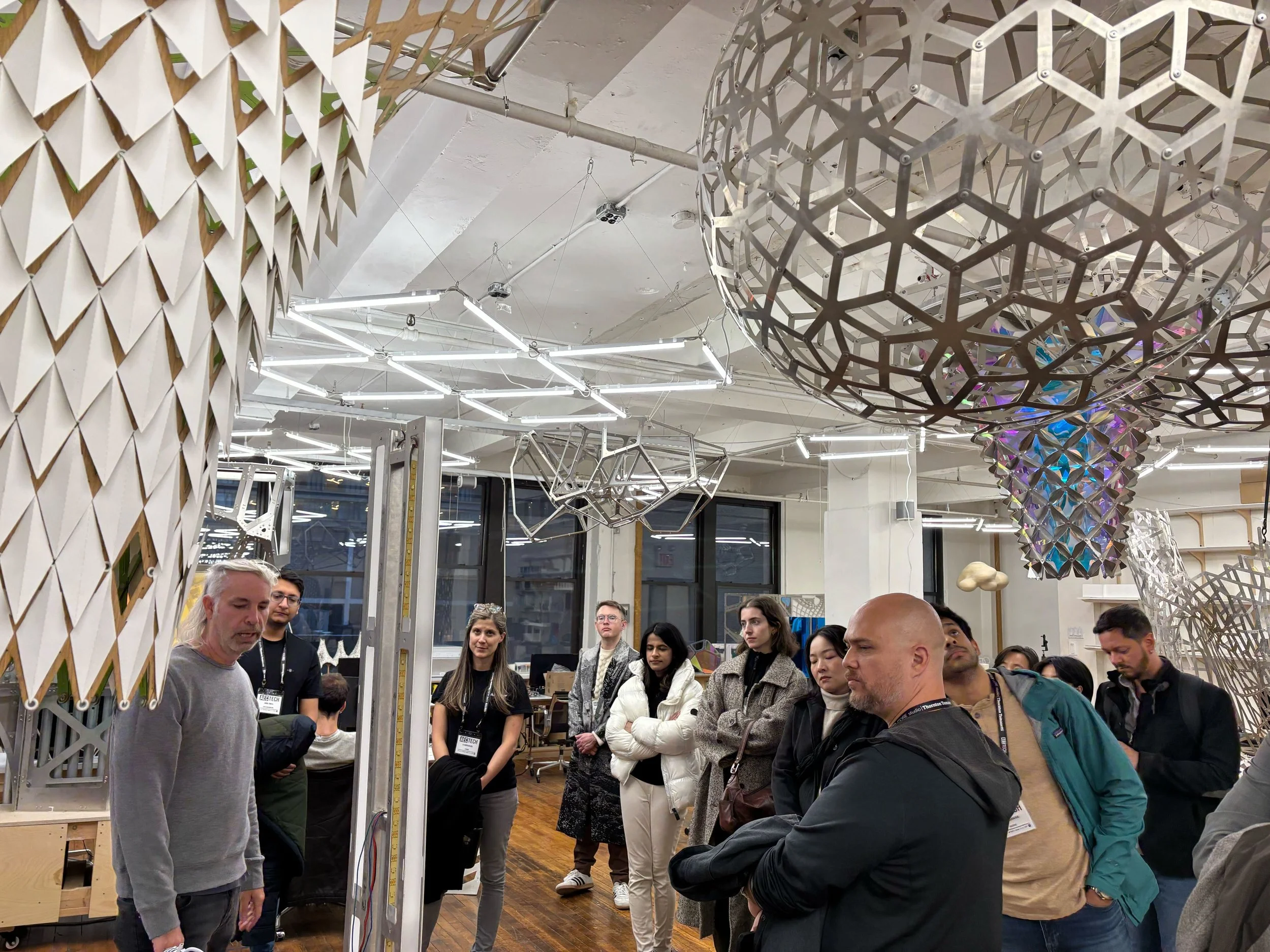
SOFTlab studio
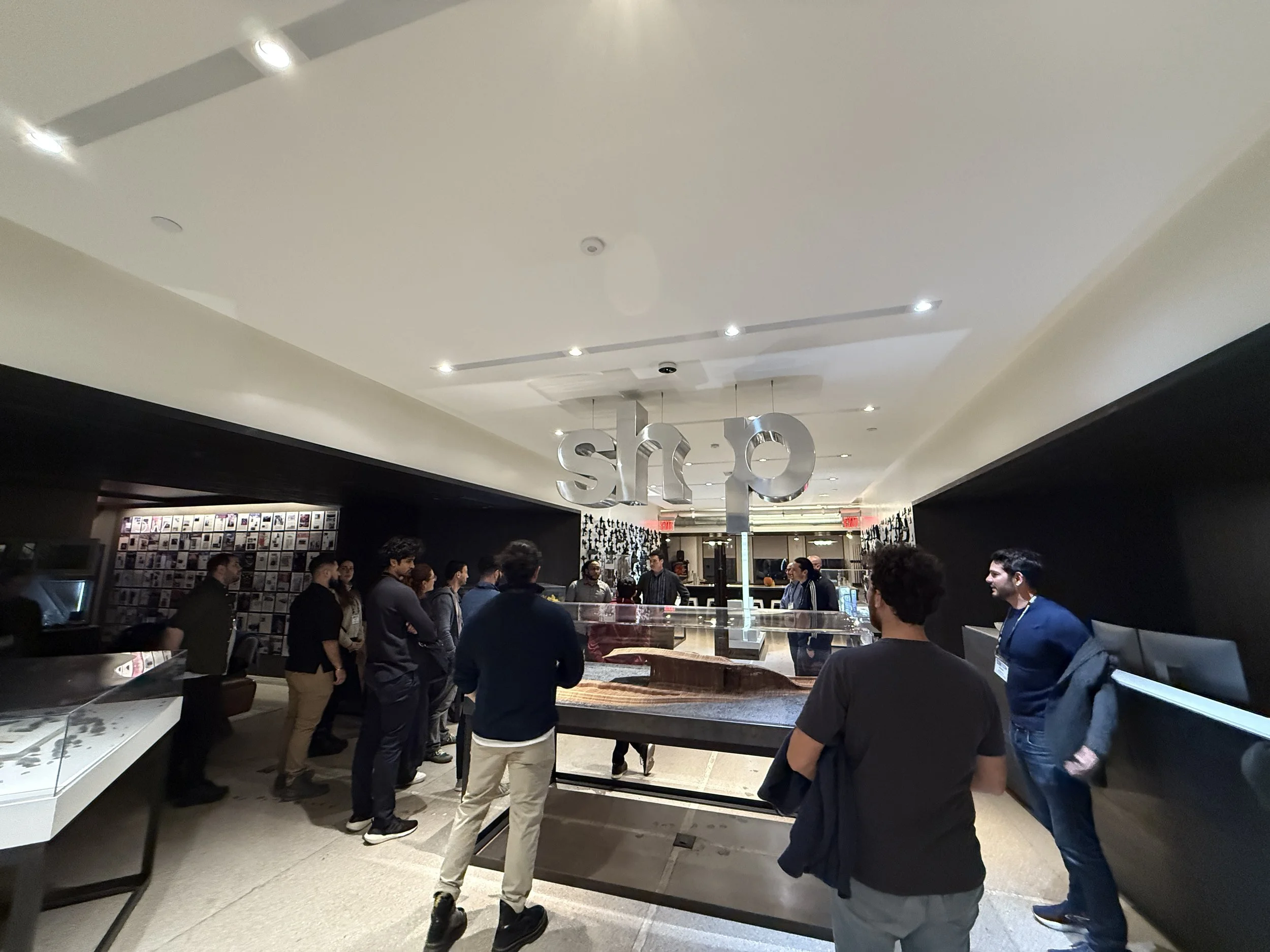
SHoP Architects
This year marked the continued expansion of the Tech Crawls, further enhancing one of the conference’s most popular and engaging experiences. On November 12th, five groups of 15 participants visited a selection of local engineering and architecture firms, where they were welcomed into offices for guided tours and in-depth discussions. These visits offered attendees a firsthand look at the innovative workflows, technologies, and design approaches that distinguish each firm’s practice, fostering meaningful exchange and insight into how leading teams are shaping the future of the AEC industry.
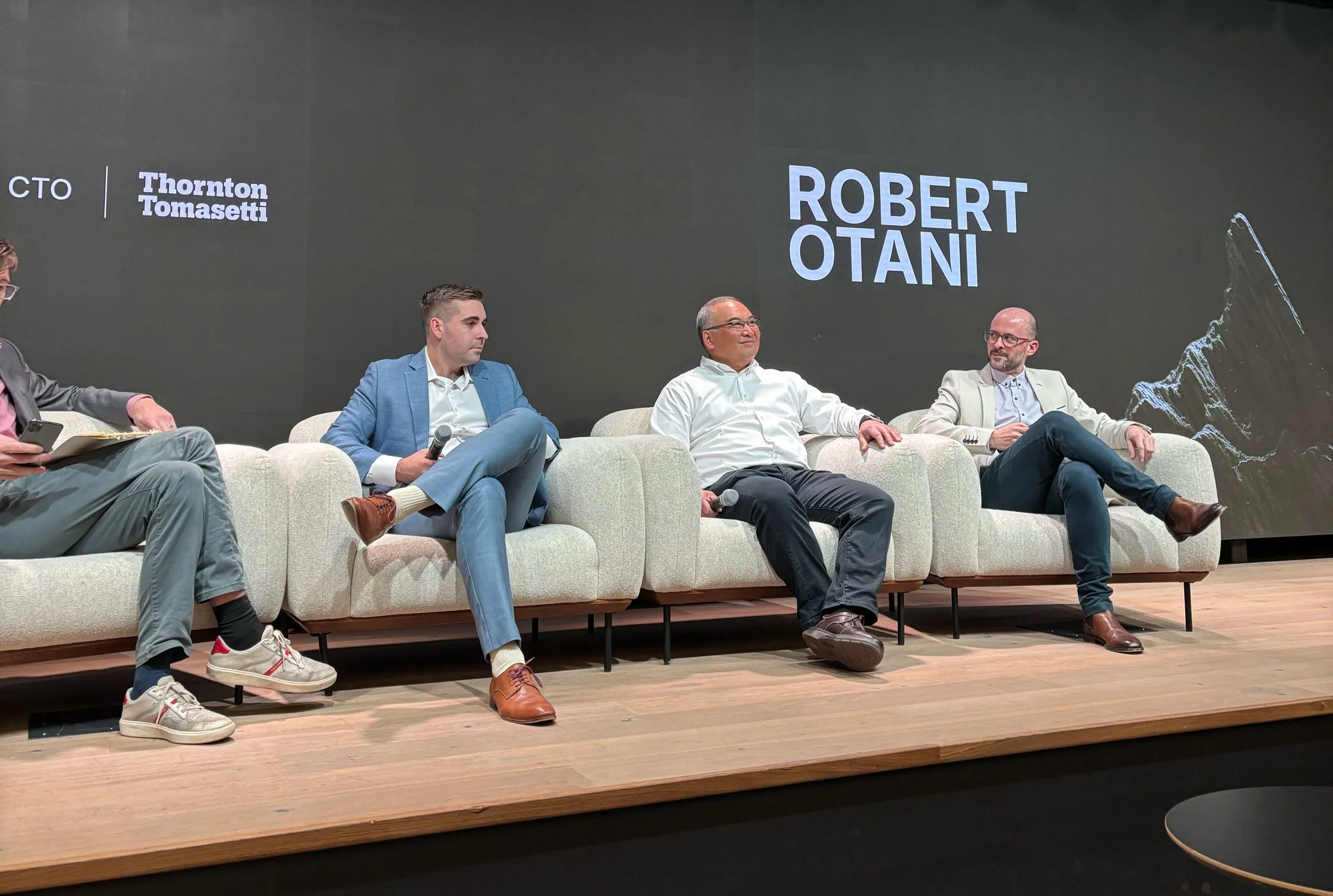
Nomic Fireside Chat
Lower Manhattan


Flatiron District


Midtown Union sq



FIDI lower manhattan


Dumbo to Manhattan

Nomic Happy Hour & Fireside Chat

At the conclusion of the Tech Crawls, Nomic hosted AI leaders from the world's top architecture, engineering, and construction firms for an evening exploring the impact AI systems are having on the design and construction of the built world.
Together with AI leaders from multinational design and construction group Aurecon and global engineering firm Thornton Tomasetti, Nomic explored the frontier applications where recent AI advances are translating into real-world impact. The conversation covered how the sector is unlocking value from fragmented, complex data sources, and set a forward-looking bar for how AI will transform design and build this upcoming decade.
Virtual Workshops
Karamba 3d
AECtech 2025 began with a full day of Virtual Workshops on Friday, November 9th, setting an energetic and engaging tone for the week ahead. The program featured seven distinct workshops that explored a diverse range of platforms, tools, and processes, providing participants with valuable insights into emerging technologies and innovative methodologies shaping the future of design and practice across the AEC industry.
ShapeDiver | A Microservice Approach to Computational Web Applications
Mathieu Huard / Head of Product
Working in Grasshopper often presents challenges regarding scaling, reusability, and collaboration. As definitions grow in complexity, maintaining, updating, and sharing logic within larger teams and across projects becomes difficult. With the latest release of ShapeDiver’s App Builder, these limitations can now be overcome through a microservice approach to computational design.
This workshop introduces a new way to structure Grasshopper-based workflows by using individual definitions as modular, reusable “microservices" within a broader, complex web application. Using App Builder’s new capability to link multiple Grasshopper models inside a single web app, participants will learn to create contextual, adaptive interfaces that extend far beyond what’s possible in a single definition.
Attendees will build a web application using multiple Grasshopper definitions, connected intelligently with App Builder’s latest tools. We will see how this approach allows us to scale the complexity of computational applications while facilitating application maintenance and collaborative workflows.
No coding is required, just Grasshopper skills and the secure, scalable ShapeDiver infrastructure, which makes it possible to turn Grasshopper definitions into a reliable backend for any online application.
HRNTSM | Design Space Exploration and Optimization with Tunny
Hiroaki Natsume / Tunny Developer
Discover how Tunny revolutionizes optimization in Grasshopper, offering powerful alternatives to traditional genetic algorithms. This hands-on workshop explores the full spectrum of optimization techniques, from Bayesian optimization (TPE, GP) to evolutionary algorithms (NSGA-II, CMA-ES), applicable to any design challenge.
Starting with fundamental concepts through simple mathematical functions, you'll learn to set up optimization problems, analyze results using Tunny's interactive dashboard and AI-powered tools, and understand when different algorithms excel. We'll progress from basic parameter optimization to multi-objective problems with constraints, demonstrating principles that apply across all design disciplines.
Through practical examples, including building facade design, you'll see these techniques in real-world challenges. You'll explore Tunny's unique human-in-the-loop functionality using Preferential Bayesian Optimization to incorporate subjective design preferences into computational workflows.
Beyond finding single optimal solutions, Tunny's design space exploration using Quasi-Monte Carlo sampling helps understand parameter relationships and build predictive models. Whether you're a structural engineer, architect, product designer, or computational designer seeking efficient optimization tools, this workshop provides practical skills beyond traditional trial-and-error approaches.
VIKTOR | Build AEC Apps in Minutes with the VIKTOR App Builder
Marcel Slootweg / Technical Specialist
Discover how to accelerate automation in your AEC workflows using the AI-powered VIKTOR App Builder. In this interactive session, you’ll build your own web app in minutes, tailored to your workflows and seamlessly connected with tools like Revit, Grasshopper, and Autodesk (APS, ACC). Explore how you can use AI to turn your ideas into working solutions. No coding, just prompting.
Romantic Technology | Customized Intelligence / Adapt RavenAI to Your Workflows in Grasshopper
Moritz Rietschel / Founder
The next frontier of computational design is already here, and it’s powered by generative AI. This intensive workshop is a master class in customizing Raven, the AI plugin for Grasshopper, to supercharge your own workflows. We have left one-size-fits-all automation behind and are now building highly tailored, high-performance pipelines that fuse designers’ control and experience with machine intelligence. Participants will dive straight into hands-on strategies for integrating Raven into their personal design and engineering processes. We’ll explore how to push Raven beyond default behavior: from adapting AI logic to your own scripts, to orchestrating plugin interoperability, to embedding simulation-informed feedback directly into design iterations. Whether it’s energy modeling, physics-informed geometry, or complex data-driven workflows, Raven can be tuned to work with your toolkit and your problems.
Perkins & Will | Prompt, Respond, Refine: Vibe Coding in Design
Harish Palani | Digital Practice Specialist
As AI becomes increasingly embedded in design practice, a new paradigm is emerging—one where we code not through syntax, but through conversation. This workshop introduces Vibe Coding, a design-oriented workflow that uses large language models (LLMs) as collaborative partners in generating scripts, geometry, patterns, and more. The participants will explore how to frame the right question, interpret responses, and refine outputs—all without traditional programming experience.
SKEMA.ai | Extending Design Intelligence: Skema’s API in Grasshopper
Marty Rozmanith / Chief Technology Officer + Co-Founder
Nikita Bokhan / Senior Product Manager
This workshop marks the first release of Skema’s developer features—giving computational designers programmatic access to the platform. We’ll walk through how Skema’s API connects to Grasshopper, enabling users to call Skema’s layout and geometry services directly from parametric definitions. Through real-world examples such as curtainwall design and unitized façade systems, attendees will see how Skema can become a data-rich engine inside custom Grasshopper workflows. Whether you’re building your own firm-specific tools or testing new design logic, this is your chance to get an early look at how Skema extends into open-ended computational design.
Finch | Generate floor plans in Finch
Jesper Wallgren / CPO & Co-Founder
From feasibility to BIM - faster. This workshop will use the Finch extensions to Grasshopper and Revit. You will build a parametric mass in Grasshopper, send it to Finch to generate floor plans, and continue with generating a native Revit BIM model.
In Person Workshops
Proving Ground + McNeel
KPF + McNeel
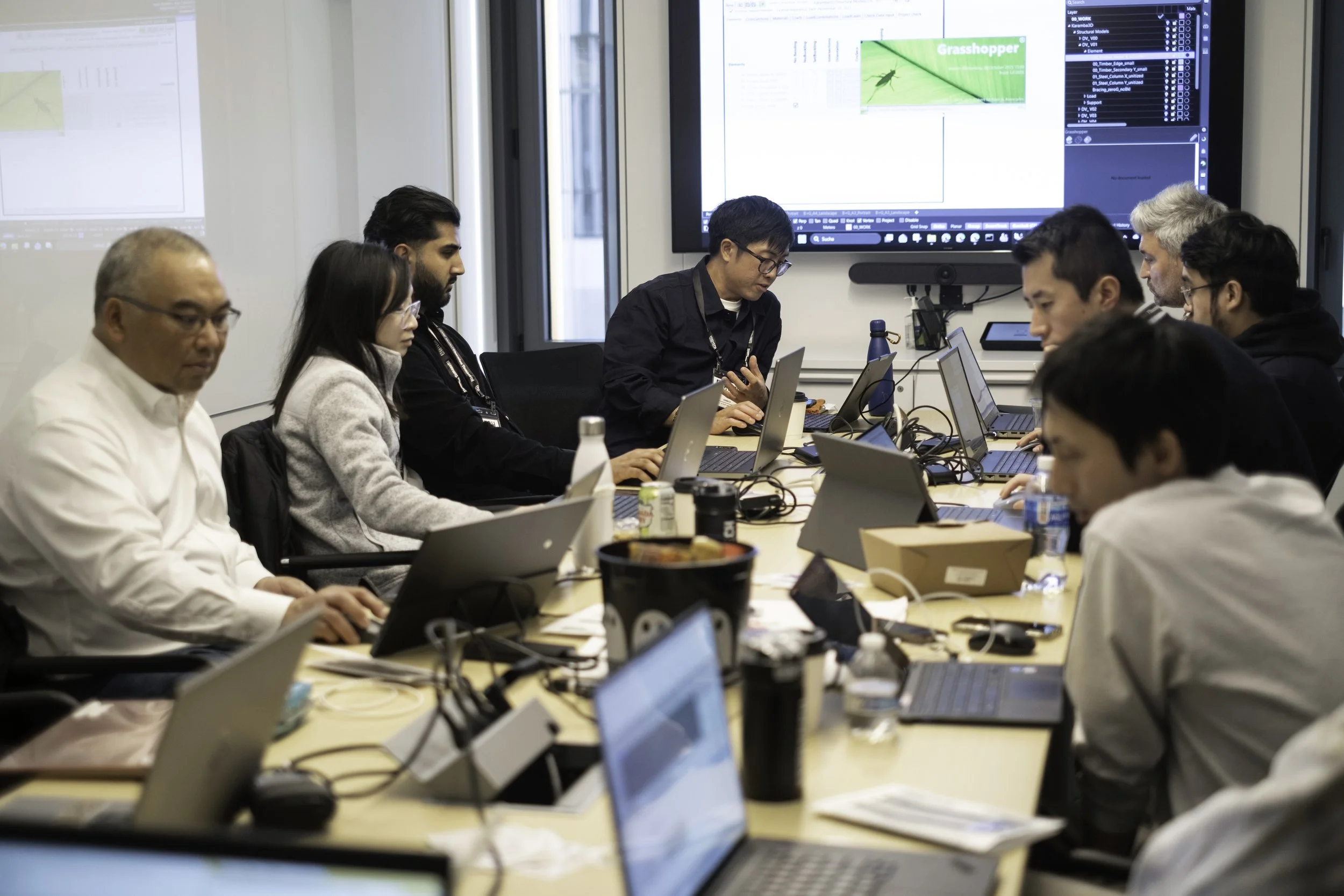
Karamba 3d
AECtech 2025 featured a full day of 14 immersive, hands-on Workshops on Thursday, November 13th, led by leading design innovators and pioneering software experts. These sessions introduced participants to a broad spectrum of powerful and forward-looking workflows, showcasing new ways of thinking and working while also strengthening and extending existing design processes. Together, the Workshops provided attendees with practical insights, technical depth, and inspiration to meaningfully enhance how they approach design and technology in their day-to-day practice.
Epic Games + Heatherwick studio | Bringing Rhino models to life with Unreal Engine
Stephen Phillips / Solution Architect @ Epic Games
Radu Axinte / Senior Designer @ Heatherwick Studio
There are many great tools out there for rendering your parametric designs, but a game engine might just be the most flexible. Working in an interactive real-time renderer allows for a dynamic presentation that supports creative exploration and wows stakeholders. In this full day workshop, attendees will take a Rhino model designed by Heatherwick Studio and turn it into an interactive animated scene using Grasshopper and Unreal Engine.
Dassault Systèmes + SHoP Architects | Parametric & Generative Design in CATIA on the 3DEXPERIENCE Platform
Jonathan Asher / CATIA Global Sales Director @ Dassault Systèmes
Nuri Miller / AEC Industry Solution Technical Senior Manager @ Dassault Systemes
John Cerone / Principal @ SHOP ARCHITECTS
The focus of this workshop will be to explore parametric, generative design & engineering techniques in a collaborative project environment. We will focus on early concept design and late-stage detailed design methodologies, harnessing the power of CATIA automation on the 3DEXPERIENCE Platform.
While algorithmic design has become commonplace in most design & engineering practices, manufacturing and assembly of building components remain highly confined to flattened construction documents and contractual 2D representations. In this workshop, we will seek to break that paradigm by designing and building systems that are constructed by an algorithm, not a drawing.
To achieve this, we will focus on deploying a novel approach to the design and engineering of a lattice space-frame structure and its accompanying façade system. We will work with dedicated CATIA applications focused on freeform surface and solid modeling, algorithmic/generative modeling of space-frame structures, automated lattice creation, and detailed cladding system design.
To facilitate collaboration, all components of the workshop will be managed on the 3DEXPERIENCE Platform, providing all participants with a live view of each other’s progress and the opportunity to collaborate in real-time on each other’s models.
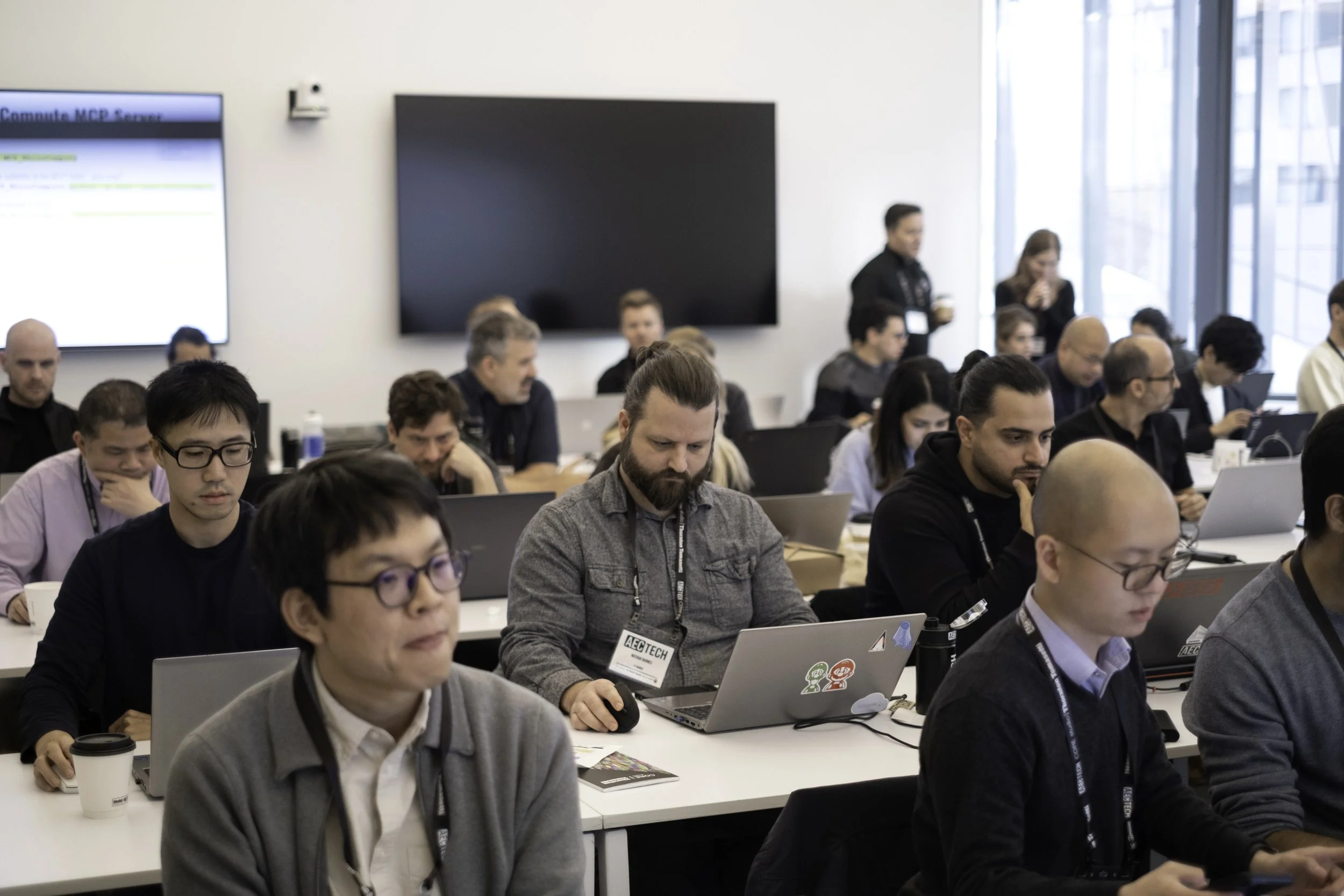
KPF | Grasshopper inside AI: Run Grasshopper definitions from AI assistants with MCP and Rhino.Compute
Justyna Szychowska / Associate Principal & Senior Software Engineer @ KPF
Aleksandra Sojka / Data & Analytics Lead @ KPF
Andy Payne / Software Developer @ McNeel
“Hey AI, could you run this Grasshopper definition for me?”
With Rhino.Compute you can run Grasshopper definitions remotely—without ever opening Rhino or Grasshopper. The Model Context Protocol (MCP) enables you to connect AI assistants directly to your custom tools. In this workshop, you’ll learn how to combine both technologies and make them work together.
We’ll start with an introduction to Rhino.Compute, followed by an overview of MCP. Then, we’ll walk through building an MCP server that interacts with Rhino.Compute.
By the end of the session, you’ll be able to run Grasshopper definitions remotely through an AI assistant using Rhino.Compute and MCP.
Foster + Partners | Cyclops: Real-Time GPU-based Environmental Simulation
Oscar Borgstrom | Associate Partner
Learn GPU-accelerated techniques for near–real-time analysis of solar obstruction, daylight autonomy, and cumulative radiation at façade, building, and urban-context scales.
Advancements in GPU-accelerated ray tracing have transformed our ability to conduct city-scale environmental analyses in near real time. This hands-on workshop presents reproducible workflows for GPU-based evaluation of solar obstruction, daylight autonomy, and cumulative radiation at three hierarchical levels of the built environment—façades, individual buildings, and urban contexts.
Kudu | Parametrically Driven ETABS, SAP2000 & SAFE
Stephen Prendergast / Developer @ Kudu & Structural Designer @ SOM
Learn how to interface with ETABS, SAP2000 & SAFE using the CSiAPI with Grasshopper, C#, and Python.
Improve your data processing workflows with modern tools and custom scripting for
Faster geometry creation
Automated property definitions & assignments
Enhanced visualization of analysis & design results
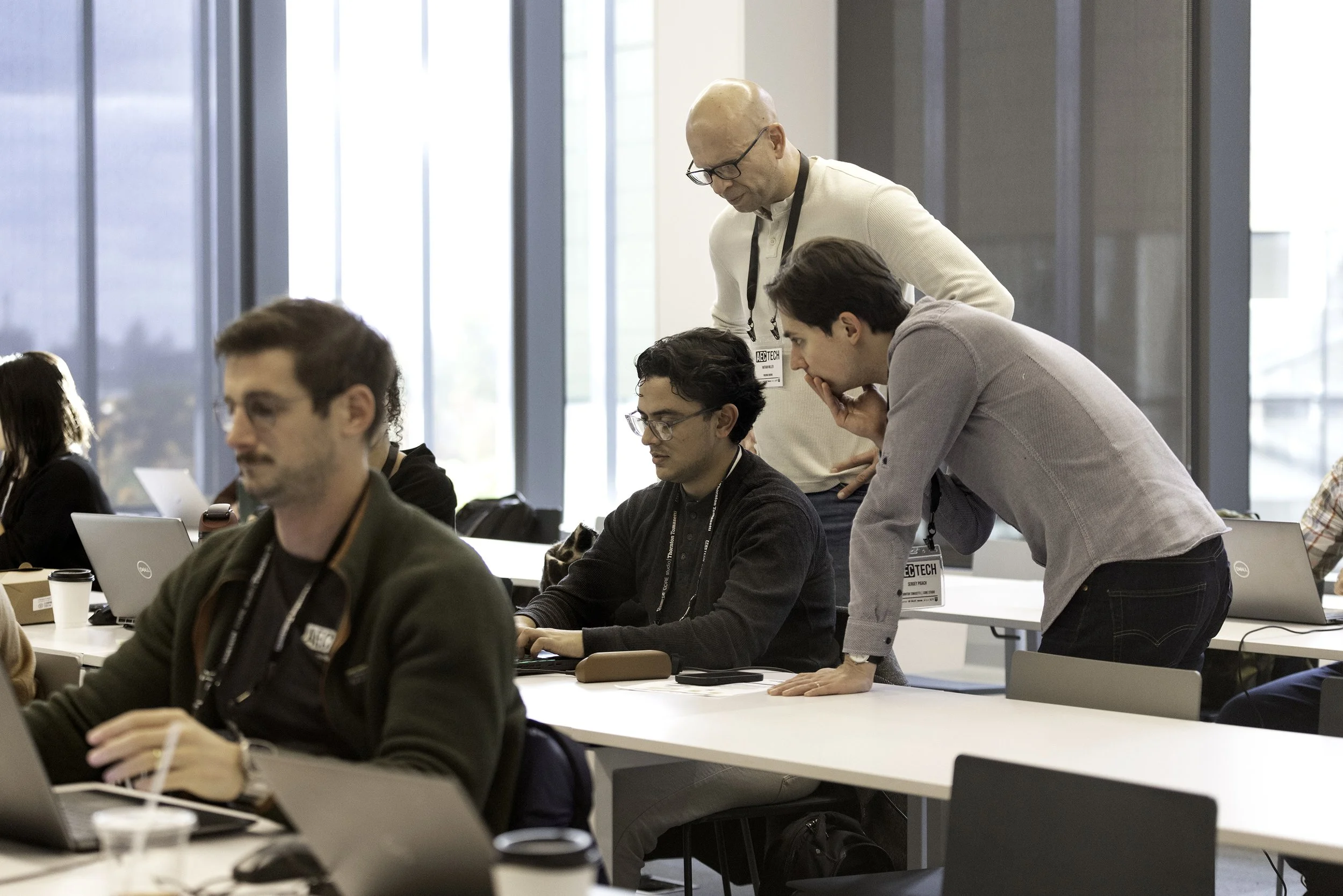
McNeel + Proving Ground | Computational Design with Grasshopper 2
Nathan Miller / CEO @ Proving Ground
Japhy Walton / Application Specialist @ Robert McNeel & Associates
For over 15 years, Grasshopper has been the essential tool for computational design workflows in architecture and engineering. In recent years, David Rutten from McNeel has been actively developing Grasshopper 2 (G2). Now in the alpha stage of development, users can begin to test and try G2 in Rhino 8 and Rhino 9.
This workshop will introduce computational design workflows with Grasshopper 2. The workshop will benefit experienced computational designers who are interested in getting oriented to G2. The topics will also serve as a general introduction to computational design concepts for new users.
Grasshopper 2 is more than an incremental update to the tools that designers have become familiar with: G2 is a ground-up rebuild and reimagining of the graphical programming language free of the technical debt of its predecessor. While the overall workflow will be very familiar to veterans of Grasshopper, the G2 interface is modernized with new data management concepts and performance enhancements throughout.
McNeel + Proving Ground | Developing Custom Plugins for Grasshopper 2
Nathan Miller / CEO @ Proving Ground
Japhy Walton / Application Specialist @ Robert McNeel & Associates
Grasshopper’s success can be attributed to the computational design community’s efforts in developing an extensive ecosystem of custom plugins. This workshop will serve as an orientation for developing and porting custom plugins with Grasshopper 2 using C# and .NET Core workflows.
This workshop is geared toward Grasshopper users, developers, and script builders interested in creating new plugins or porting their existing plugins to Grasshopper 2. To guide the workshop, C# templates and example source code will be provided for building a functional Grasshopper 2 plugin.
Skema + ShapeDiver | From concept to BIM: Reusable design intelligence in the cloud with Grasshopper, ShapeDiver, Skema, and Revit
Marty Rozmanith / Chief Technology Officer + Co-Founder @ Skema.ai
Nikita Bokhan / Senior Product Manager @ Skema.AI
Alexander Schiftner / CTO & Co FOUNDER @ Shapediver
Edwin Hernandez Gomez / Project Manager @ Shapediver
This two-part workshop shows how firm-specific knowledge captured in Grasshopper and Revit can be reused through a cloud-based workflow.
Part 1 covers how to generate custom unitized facades and integrate Skema with ShapeDiver for reusable, firm-specific design logic.
Part 2 demonstrates how those results flow into Revit for high-fidelity BIM deliverables that preserve design intent.
Schmidt Hammer Lassen | Modern UX for AEC Stack: Building Web Interfaces in Revit & Rhino
Victor Wanderley Barbosa | Senior Digital Practice Manager
This hands-on workshop will guide participants through building a modern web-based application on top of an AEC-focused tech stack, integrating with both Revit and Rhino. Over the course of 4 hours, we’ll create a shared web interface loaded inside each host application using WebView2, and connect it to their respective APIs to perform a fun, lighthearted task. The focus will be on showing how a web interface can help deliver delightful, intuitive, and visually polished user experiences, while keeping the architecture clean and maintainable. Attendees can choose to follow along, building only the Revit add-in, only the Rhino plugin, or both if they’re feeling adventurous.
IaaC + Thornton Tomasetti | CORE studio | Exploring Buildings as Graphs
David Andrés León / Director @ MaCAD IaaC
Sophie Moore / Senior Applications Developer @ CORE studio
Representing buildings as graphs enables efficient analysis of spatial relationships, navigation, and connectivity by abstracting their properties based on their relationships. This approach helps humans and computers understand buildings, enabling tasks like pathfinding, optimization, and simulation. The workshop will focus on the representation and visualization of buildings as graphs while exploring their opportunities. Participants will learn how to convert IFC files to graphs, visualize them in a web application to get insights, and query their properties using LLMs.
Karamba3D | Scaling Up Parametric Engineering Workflows with Karamba3D
Matthew Tam / Operations Manager
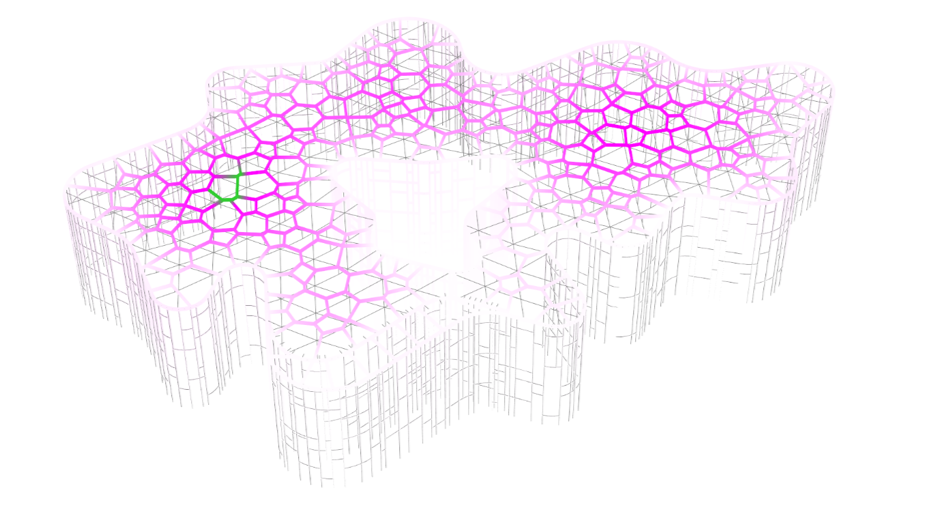
Karamba3D is a parametric finite element analysis tool embedded in Grasshopper, enabling fast, interactive structural analysis within the Rhino environment. This hands-on workshop will explore how to make these powerful capabilities more accessible to non-expert users, facilitating both the rapid creation of structural models and intuitive interaction with analysis results.
Building on the latest developments at Karamba3D and custom workflows developed by Bollinger+Grohmann, the session will focus on UI/UX strategies and templated model setups designed to lower the entry barrier for architects, engineers, and designers. The goal is to support wider adoption of computational design methods across multidisciplinary teams.
Participants will gain insights into practical tools, templates, and interface techniques that eliminate the need for advanced scripting knowledge. The second half of the workshop will introduce simple interaction methods—such as custom UI elements and keyboard-based input tools within Rhino and Grasshopper—to make result exploration easier and more engaging.
Symposium
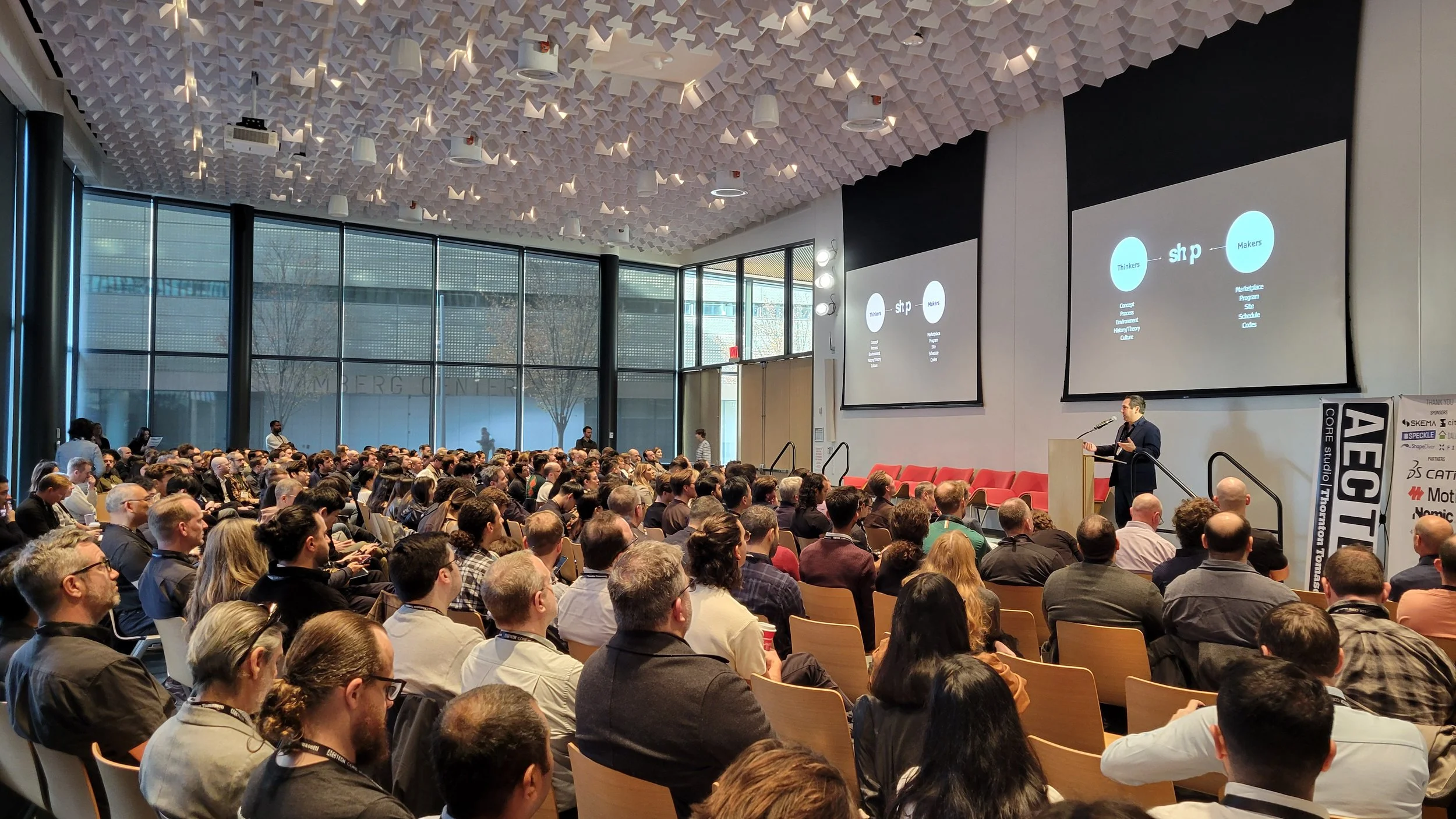
On Friday, November 14th, an inspiring and accomplished group of leaders from across the AEC, Design, and Software communities came together to present, share, and engage in thoughtful discussion around the future of collaborative practice. Through a series of talks and conversations, they explored the critical role technology continues to play in transforming how teams work together, pushing the boundaries of innovation, and shaping the next generation of practice across the industry.


















Hackathon
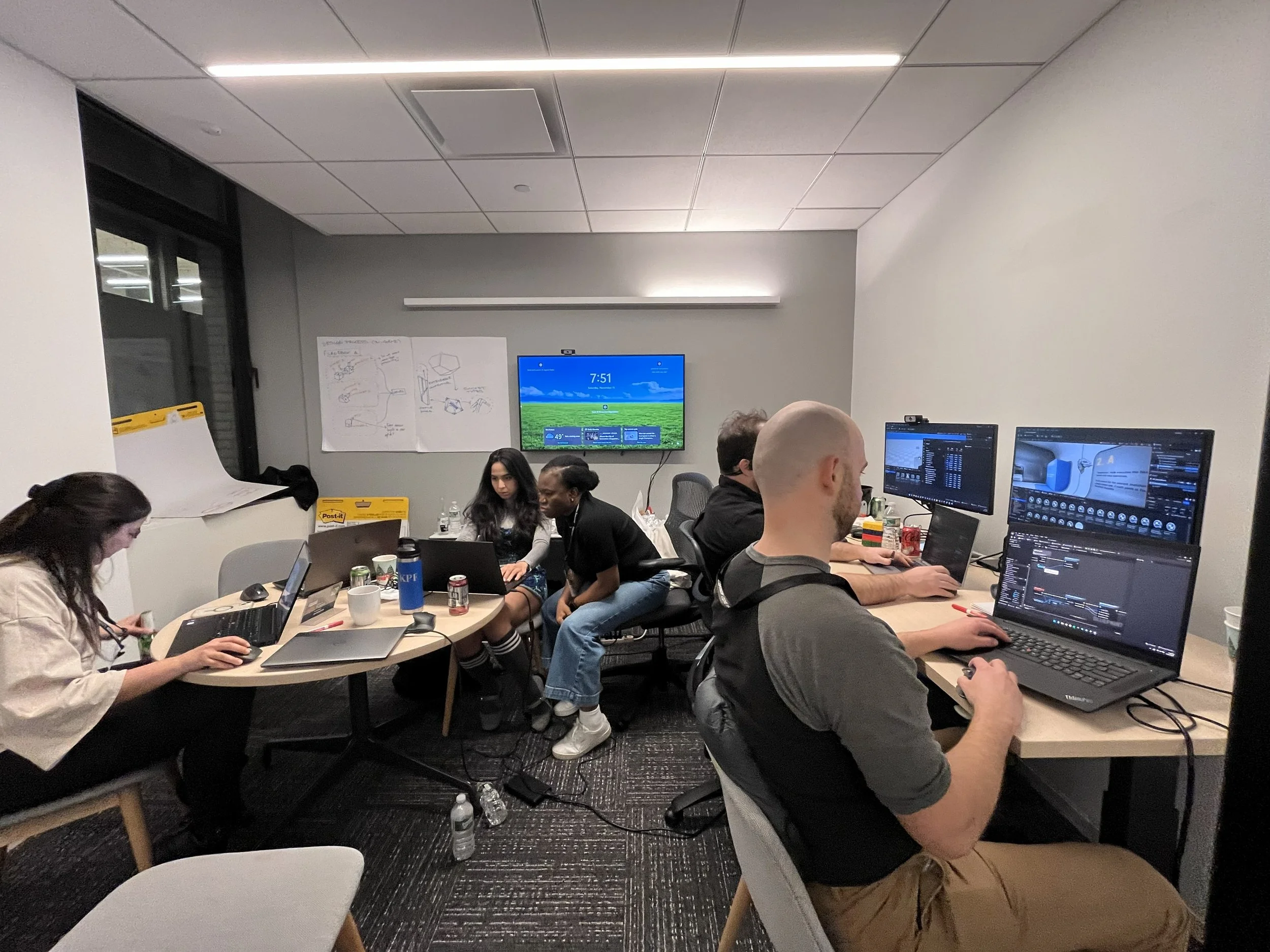
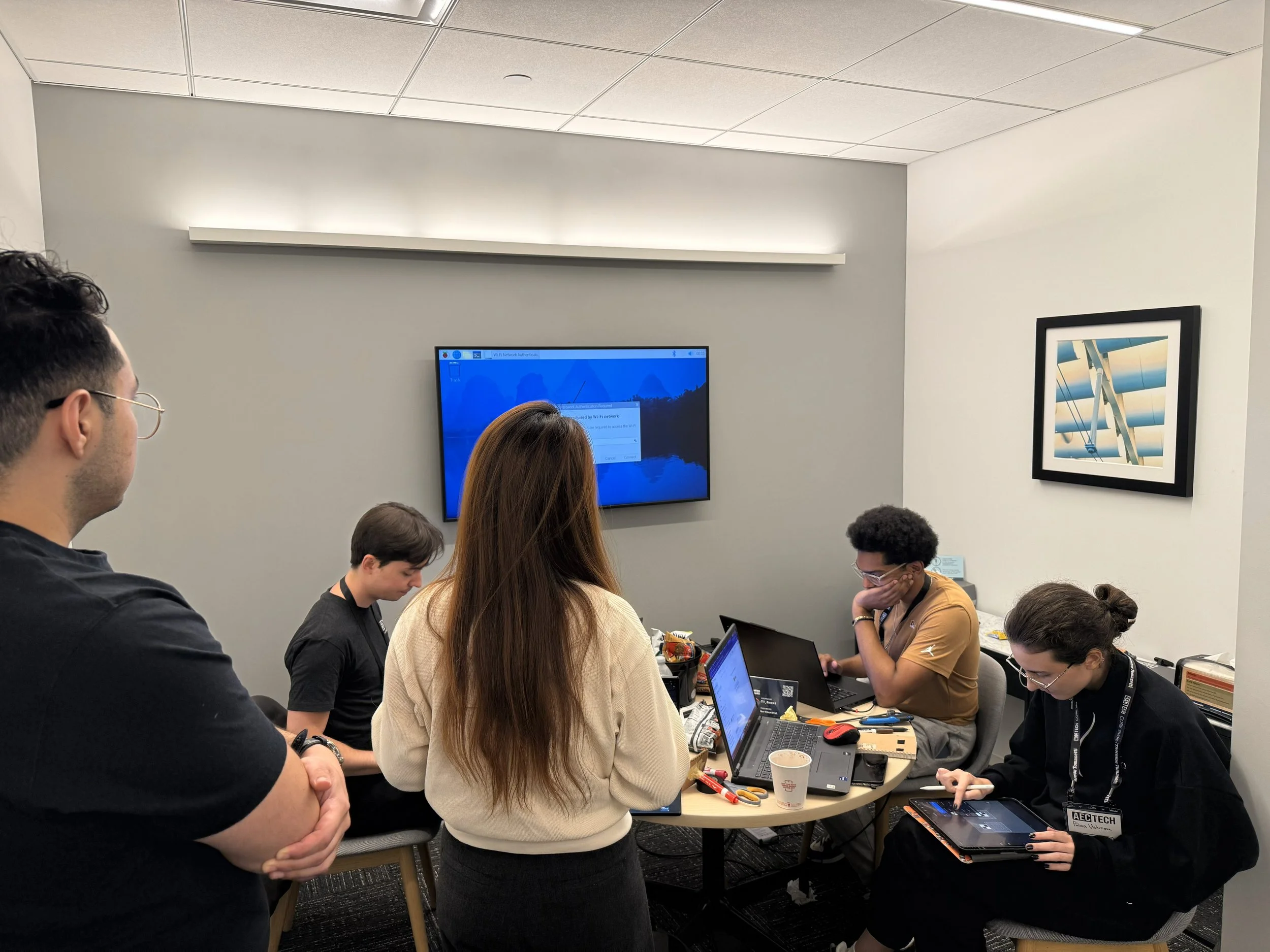
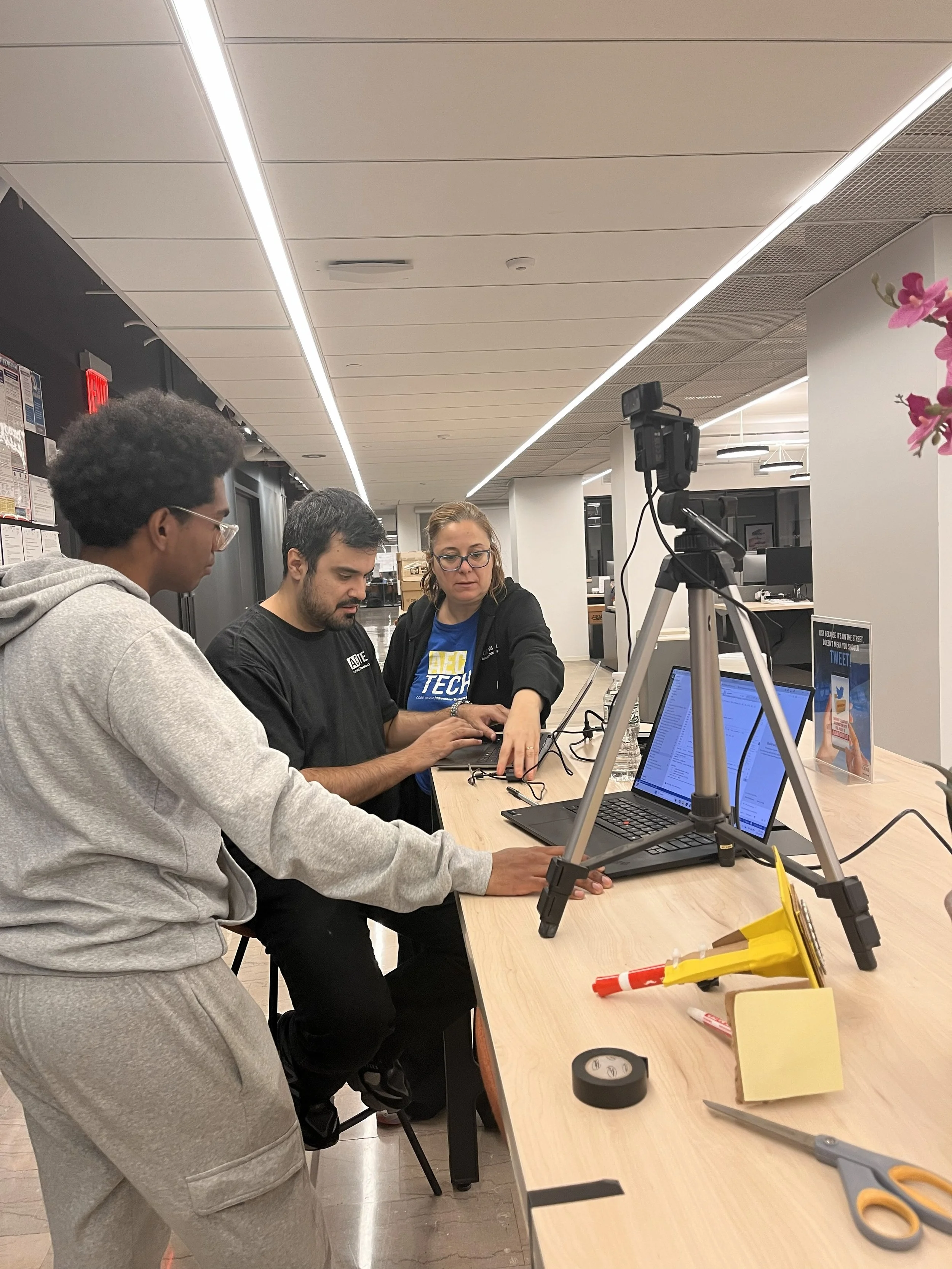
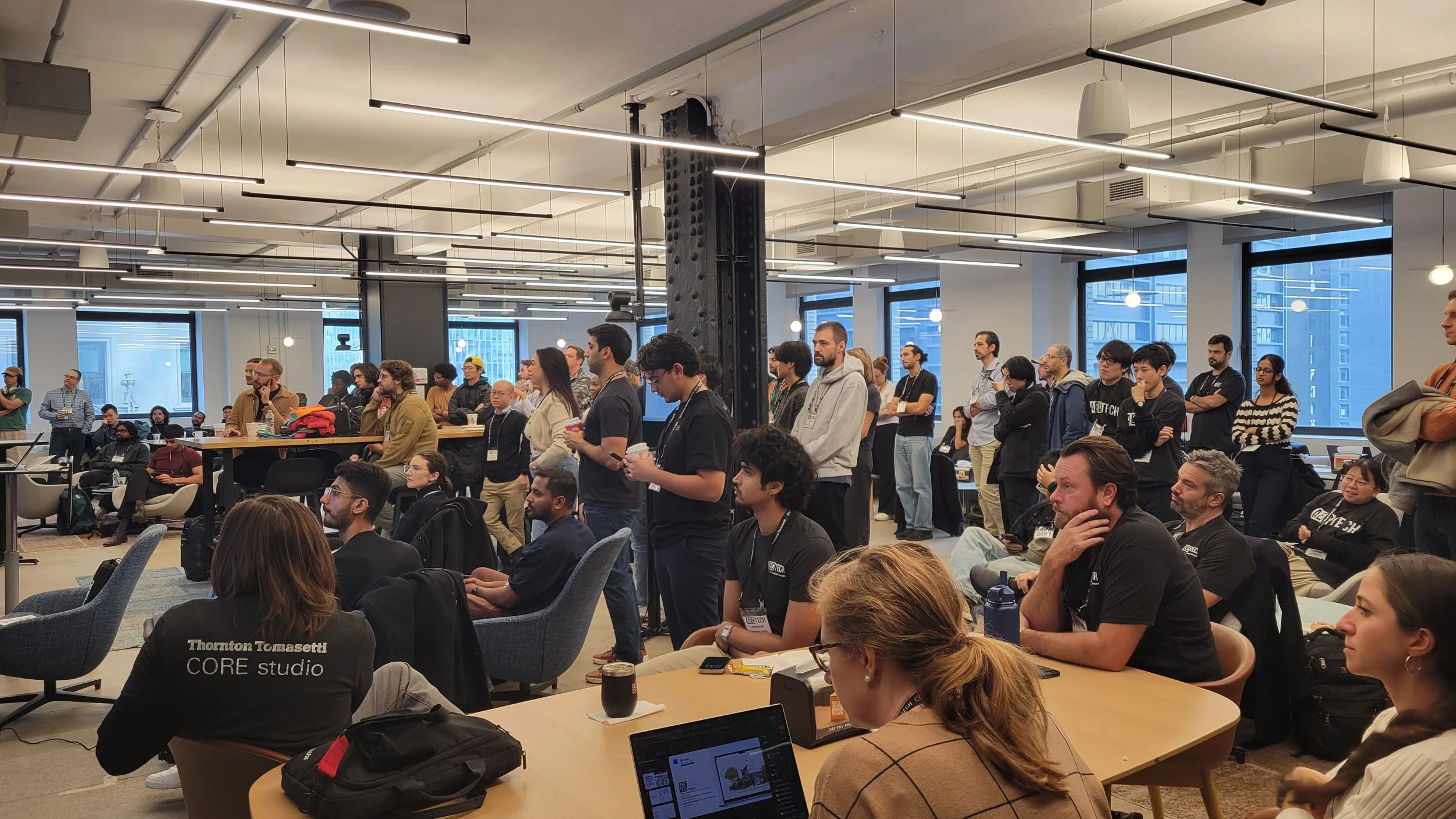
On Saturday, November 15th, more than 150 hackers from a wide range of professional and technical backgrounds came together for an intensive 26-hour hackathon, hosted in person at Thornton Tomasetti’s New York offices. Working collaboratively across disciplines, participants tackled ambitious challenges and transformed bold ideas into reality, ultimately producing 14 impressive and innovative projects that showcased the creativity, technical skill, and collaborative spirit of the AECtech community.
A special thanks to this year’s panel of judges!
David Andres Leon / Director of MACAD | IAAC
Justyna Szychowska / Associate Principal & Senior Software Engineer | KPF
Japhy Walton / Application Specialist | Robert McNeel & Associates
George Guida / Founder & CEO | xFigura
2025 Hackathon Winners
BEST OVERALL HACK: Photon- CYBORG
A mixed reality drawing tool that bridges human intuition with computational precision—augmenting, not automating, the act of drawing.
James Coleman / Sum Point, Sergey Pigach / Thornton Tomasetti CORE studio, Elcin Ertugrul / Thornton Tomasetti CORE studio, Nathan Barnes / Zahner, Polina Ustinova / Entech, Zarak Kasi / Thornton Tomasetti CORE studio, Brian Murray / Hathaway Dinwiddie, Bell Wang / KPF, David Vargas / DLR Group
MOST COLLABORATIVE: BIMshady
2D sketch to BIM
Renee Dobre / NBBJ, Craig Forneris / Populous, Sophie Moore / Thornton Tomasetti CORE studio, Rachel Min / KPF, Salma Kattass / Workshop APD, Ryan Johnson / Clark Nexsen, Jason Yang / Thornton Tomasetti CORE studio, Harish Palani / Perkins & Will, Isandro Gutierrez Malik / Stantec
MOST IMPACTFUL: Contract Cadence
A design assistant that detects misalignments between your contracts, specs, and design models—catching scope creep before it catches you.
Douglas Kim / Amova Asset Management Americas, Inc., Faye Wang / HLB Lighting Design, Scott Lebow / Baskervill, Chu Ding / RunToSolve, LLC, Janez Mikec, VIKTOR